Good News, Gen Next
You'll be happy to hear, future Americans, that Biden and Congress have agreed to tie you up for the rest of your lives with a debt you can never pay (the debt before this was about $225,000 per taxpayer) in order to give us each a $1400 check, not because we actually need it or that it will actually remecy anything, but, well, because some will certainly feel happier with Democrats somehow. Oh, no, you won't get that federal $15/hr you hoped for. No, you won't get as much for unemployment as promised. Oh, no, this won't solve the COVID crisis. In 1960 the debt-to-GDP ratio was 53%. In 1980, it was 34%. Today it is 130%. Good luck with that. But, hey, at least we won't have to pay up in the end. That's your problem. We're a year and $2.7 trillion into "15 days to flatten the curve." Biden says, "Just $2 trillion more should do it."
Pardon Me. Your Bias is Showing
Forbes reported on Biden's orders this week addressing gender inequality and sexual violence. Oddly, not a word about Cuomo. Wonder why? The report said he would "focus on changes imposed during the Trump administration." Why, do you suppose, does this Forbes writer not view Biden as "imposing changes"? Of course, none of this is a surprise. He is pushing "reproductive rights" which is always code for "killing babies in the womb" and, of course, the rights of transgender people over the rights of the rest of the world. What does surprise me is the number of Christians who switched from Republican to Democrat to support this kind of thing.
The Latest Victim
The latest victim of the Cancel Culture after last week's execution of Dr. Seuss appears to be Pepé Le Pew. You remember Pepé Le Pew. He was the skunk with the French accent on the quest of misguided love with a black cat that accidentally got a white stripe painted down her back. Hilarity ensues. Well, it did. Now they say he "normalized rape culture." Now, I've seen a lot of those cartoons and I don't recall a single rape, but, hey, what do I know? "To the pure, all things are purel."
Pro-Life
Arkansas passed one of the very few actually pro-life bills in existence in America. Arkansas Governor Hutchinson signed into law legislation that allowed abortion only in the cases of a risk to the mother's life. It excludes rape or incest because, if you're going to be pro-life, rape or incest don't qualify as a threat to life. It won't last, of course. The courts will preclude it. The fight will escalate. It will eventually go to the Supreme Court ... which is the real aim. The simple fact that Arkansas assembled "overwhelming legislative support" for a pro-life stance is quite amazing in this day and age.
But ... I Thought He Was Going to Fix This
Ding, dong, the wicked Trump is gone, and our savior (lowercase "s") has come to save us from the Trump. Specifically, Biden has acted to save migrants from the mistreatment of the former administration. So ... how is it that a record number of migrant children are now being held in facilities ... even beyond the 3-day limit? The number tripled in the last two weeks! A warning for those who put their trust in princes.
And On That Note
Similarly, the governor of Mississippi also signed a controversial bill into law. This one prevents biological males from playing on women's sports teams. As it turns out, it's only haters that want to protect women's sports. The open-minded, inclusive, tolerant people have no concern at all for subjecting women to the biological disparity.
Warning Bells
Beth Moore has left the building. Moore announced leaving the Southern Baptist denomination (SBC) because of things that "haven't remained in the past." She has complained about "an evangelical culture that demeans women, promotes sexism, and disregards accusations of sexual abuse." She condemns "Trumpism" and "Christian nationalism." Not being a Trump supporter myself, I understand some of that. Being a follower of God's Word, I don't understand some of that (like when "demeans women" is used to describe the biblical restrictions to the role of women in the church). Whether she is going off to do God's work somewhere else or going off the rails is yet to be seen. We should surely be conscious of Galatians 6:1 if necesssary.
Covidiocy
The headline reads, "Mount Everest to reopen for first climbers post-pandemic." Apparently the remoteness and wide open spaces weren't "masked and socially distanced" enough. In the same vein, a grandmother got a prescription for a hug so she could see her grandchildren for the first time in a year. I know that "Covidiot" means something different to most people, but this truly is "Covidiocy."
Speaking of ...
And Evanston, Illinois, has become the first American city to make modern Evanstonians (Is that the right term?) pay for the sins of their fathers for "the city's past discriminatory housing policies," giving $25,000 to black families for housing. Not even God does that (Deut 24:16).
Not All Satire is Humor
In light of the several women who have come forward with accusations of sexual harrassment from Governor Cuomo, the headline from the Babylon Bee makes sense ... but it's more chilling than funny: "10,000th Victim Comes Forward To Accuse Cuomo Of Inappropriately Killing Her Grandma."
Saturday, March 13, 2021


Friday, March 12, 2021
Semper Reformanda
It's a Latin phrase (of course). It was popularized by Karl Barth who supposedly got it from St. Augustine. Apparently it actually came from a book written in 1647. It means "always reforming," so it might seem odd that it came from a minister in the Reformed Church in the Netherlands. "I mean, aren't you already reformed?"
The Reformation is sometimes misunderstood because of our current use of the term "reform." When we use it we think of simply improving something or someone. To those in the Reformation they were more specific. They intended to re-form the Church to its original beliefs. They wanted to "reset to default," so to speak. They didn't want to improve it; they wanted to return it from whence it had strayed.
It seems like this has always been the case. From the beginning, there was a constant need to push back on straying. So Paul pushed back on Corinth's gross sin and on Galatia's legalism and on Colossae's gnosticism and so on. Jesus told the Ephesian church, "I have this against you, that you have abandoned the love you had at first. Remember therefore from where you have fallen; repent, and do the works you did at first." (Rev 2:4-5) Reformation. Not as much of "Improve" as a "Return." It was necessary before the close of the canon and it continues to be necessary today. But ... how?
Paul wrote,
The world is constantly at odds with God and His people. That's not a complaint, nor is it a surprise. It is expected. As such, we need to constantly be aware that the natural tendency is to synchronize with the world -- to conform to the world -- and not with God's Word and we need to constantly fight that tendency. Paul warned, "Therefore let him who thinks he stands take heed that he does not fall." (1 Cor 10:12) If you think, "I've got this; I won't slide," think again. It has always been the tendency to slide from good to bad, so we need to be semper reformanda -- always reforming back to God's version of good and bad, truth and lies. There is no improving on God's version. If we are not vigilant, both for ourselves and for our churches, like a poorly aligned vehicle if we take our hands off the wheel we'll drift. And that can have catastrophic consequences.
The Reformation is sometimes misunderstood because of our current use of the term "reform." When we use it we think of simply improving something or someone. To those in the Reformation they were more specific. They intended to re-form the Church to its original beliefs. They wanted to "reset to default," so to speak. They didn't want to improve it; they wanted to return it from whence it had strayed.
It seems like this has always been the case. From the beginning, there was a constant need to push back on straying. So Paul pushed back on Corinth's gross sin and on Galatia's legalism and on Colossae's gnosticism and so on. Jesus told the Ephesian church, "I have this against you, that you have abandoned the love you had at first. Remember therefore from where you have fallen; repent, and do the works you did at first." (Rev 2:4-5) Reformation. Not as much of "Improve" as a "Return." It was necessary before the close of the canon and it continues to be necessary today. But ... how?
Paul wrote,
All Scripture is breathed out by God and profitable for teaching, for reproof, for correction, and for training in righteousness, that the man of God may be complete, equipped for every good work. (2 Tim 3:16-17)Given the source of Scripture -- "breathed out by God" -- note the benefits of God's Word. There is teaching -- "This is the way." There is reproof -- "You've strayed from the way." There is correction -- "This is how to get back to the way." And there is training in righteousness -- "This is how you stay in the way." All the necessary components to learn what is God's truth, what constitutes error, how to correct error, and how to stay in God's truth are contained in God's Word. The Bible is God in our ears saying, "This is the way, walk in it." (Isa 30:21)
The world is constantly at odds with God and His people. That's not a complaint, nor is it a surprise. It is expected. As such, we need to constantly be aware that the natural tendency is to synchronize with the world -- to conform to the world -- and not with God's Word and we need to constantly fight that tendency. Paul warned, "Therefore let him who thinks he stands take heed that he does not fall." (1 Cor 10:12) If you think, "I've got this; I won't slide," think again. It has always been the tendency to slide from good to bad, so we need to be semper reformanda -- always reforming back to God's version of good and bad, truth and lies. There is no improving on God's version. If we are not vigilant, both for ourselves and for our churches, like a poorly aligned vehicle if we take our hands off the wheel we'll drift. And that can have catastrophic consequences.
Thursday, March 11, 2021
Losing My Religion
The debate has gone on literally for centuries. Millennia, in fact. Can you lose your salvation? "Well, of course you can!" one side asserts confidently while the other is aghast. "What? Of course not!" So, like gunfighters in fabled Westerns, they grab for their swords (okay, the metaphor doesn't quite work ... give me a break) and start slinging verses.
"Hebrews 6 speaks of those who fall away and cannot be restored to repentance!" (Heb 6:4-6) "Jesus said, "I gave them eternal life and they will never perish and no one will snatch them out of My hand'!" (John 10:28) "Paul said you must test yourself to see if you're in the faith!" (2 Cor 13:5) "Paul said he was confident that He who began a good work in you would bring it to completion!" (Php 1:6) And each "round" pings harmlessly off well-built defenses because the goal is not unity or understanding, but positioning. That is, so few are seeing, "Wait a minute, if these are both in Scripture, don't we have a genuine contradiction???"
I think the question goes farther back. How are you saved? "Oh," some might say, "I was saved by being good." You might lose that salvation. "No," others might counter, "I was saved apart from works, but I continue to be saved by my faithfulness." You might lose that salvation. You see, when it depends on us, it is entirely possible that we can lose it ... because we are not entirely dependable. And the biblical tension around that concept is clearly present. As much as it depends on me, there is a constant concern about retaining that salvation. In fact, it's pretty sure that salvation will be lost. (And according to Hebrews 6:4-6, if it is, that loss is permanent.)
If, on the other hand, I'm saved as a gift (Eph 2:8-9), then that's an entirely different proposition. If I'm saved apart from works (Rom 3:28), then that's a different concept. Many like to change tracks in the middle. "I'm saved as a gift but maintain it on my own." If that's so, it cannot be said that we're saved apart from works, since those works maintain that salvation.If someone gives me gas for my new car and I drive on that, when I have to put gas in on my own, I'm no longer operating on that gift; I am supply the fuel that makes that car go. That's not "saved apart from works."
There is, of course, another question in here. What is salvation? It's not a thing; you don't have it in a basket that you might misplace. It includes eternal life, but if you can lose that eternal life, how is it eternal? Salvation accompanied by eternal life is not a thing, but a condition. It is a condition we cannot cause, so it is a condition we cannot interrupt. Either we are saved as a gift apart from anything we might do or choose (John 1:13; Rom 9:16, 18), or we are not. If we are, then the texts that warn us to work out our salvation and examine ourselves to see if we're in the faith are aimed at our own efforts while the texts that refer to God's work (which never fails) show a trustworthy God that saves first on the basis of His grace and not our actions and saves continuously based on His grace and not our actions. This salvation is sure. This version says to you, the saved, that you must "Work out your salvation with fear and trembling" (Php 2:12) with an eye toward the reality that "It is God who is at work within you both to will and to do His good pleasure." (Php 2:13) If we don't hold both in proper tension, we lose something important. If we do hold them in proper balance, we can actually have assurance.
Wednesday, March 10, 2021
Enough
"Greed is good," Gordon Gekko in the movie, Wall Street, boldly declared. Of course, the Bible disagrees. Paul wrote that greed amounts to idolatry (Col 3:5; Eph 5:5). The Greek word is pleonexia (translated "covetousness" in some places) and simply means "desire to have more." Well, that seems harmless enough. Don't we all want more? But, of course, "Everybody is doing it" does not constitute an argument for morality, so apparently everyone in this case is doing it wrong.
So why is greed wrong? Why is desiring to have more a sin? No, the question is, how does that amount to idolatry? "Well," they will tell us, "this 'greed' isn't simply wanting more; it is an excessive love of wealth. You know, 'the love of money is the root of all evil.'" And, of course, we wouldn't want to deny that the love of money is the root of all sorts of evils (1 Tim 6:10), but is that what is being stated here? It doesn't look like it. I would suggest that this additional descriptor -- "excessive love of" -- is the product of a wealthy society trying to justify their desire for more.
So what else? Maybe it means that greed is as bad as idolatry or leads to idolatry. or is service to wealth. Maybe it means that greed is slavery to an economic system or maybe it's putting your trust in wealth. Maybe it's a combination of all that. But most of those require steps of interpretation that the text doesn't offer. If we pursue the easiest line of thinking, greed is a motivating desire for more because we believe we don't have enough. And that would indicate that 1) we aren't trusting God and 2) that "enough" is what we trust in. In this version of greed, we can find an explanation for the correlation of adultery with idolatry found elsewhere in Scripture (e.g., Jer 3:8-9). "It's that woman/man You gave me, Lord. She/he is not enough. I'll find something better." Which appears to be the very idea of greed. "God, you haven't given me enough; I'll go and get something more."
It boils down to that fundamental question: Is God enough? Are His grace and mercy, His love and compassion, His power and His wisdom, His character and His gifts enough? Or are we looking for more? Is the life He is providing sufficient, or is He lacking and we need to do something more? (I'm not suggesting a passivity -- "I'll just let God do whatever He's going to do." We certainly have to do things, but are we doing them for our own gain or are we doing them in service to God and others?) Is God enough? It is my deep concern that for most of us at some time or another the truthful answer would be "No" and that should horrify us about ourselves.
Tuesday, March 09, 2021
The Danger of Regulating Free Speech
We all know that one of our fine 1st Amendment rights is the right to free speech. And, just as much, we know that we do not have an unrestricted right to free speech. You cannot, for instance, yell, "Fire!" in a crowded theater. Or urge your followers to "Stop the Steal!" ... even if you tell them to do it peacefully. That speech is not free.
But why? Why do we have free speech? What is it good for? Some think that it's good because we all have good ideas and so we should all be allowed to contribute. From a strictly biblical perspective, that's not quite right. From a strictly biblical perspective, the heart is deceitful and desperately wicked (Jer 17:9). From a strictly biblical perspective, out of the heart the mouth speaks (Matt 15:18-19). From a strictly biblical perspective, "no human being can tame the tongue." (James 3:8) So, no, it's not because we all have good ideas so everyone should have their opportunity.
I would contend that it is precisely because we are sinners, because we have deceitful hearts, because we need a renewed mind that we must not regulate free speech. It's precisely because we can't do it well or right. It's because, as fallen humans, we'll begin to regulate based on what we like or don't like, accept or don't accept, allow or don't allow. You know, like they're doing today.
Now, now, don't get your knickers in a twist. They've done it all along. From a strictly biblical perspective, you find a perfect example in Acts when the council warned the disciples, "We strictly charged you not to teach in this name, yet here you have filled Jerusalem with your teaching, and you intend to bring this man's blood upon us." (Acts 5:28) Unacceptable speech -- speech that can save your soul -- banned. That's why regulating free speech is a bad idea ... and an idea that is finding growing popularity today.
Monday, March 08, 2021
What a Day!
I've recently noted the passing of two family members -- one to COVID and one to cancer. Both knew Jesus, so both are in a better place. So it might seem unnecessasry to mourn their passing. Both are no longer sick, in pain, suffering, any of those unpleasant things -- only good things. Still, we mourn their passing. Paul says told the Thessalonians "not grieve as others do who have no hope." (1 Thess 4:13) That is, he did not say not to grieve; he said we grieve with hope.
Why is that? Well, if we're considering it with sanity, it's not because they died and went to heaven. We're not mourning that they went on ahead. No, it's our loss we mourn. It's their presence with us. It's the ways in which they enriched our lives by being here. And I don't see any problem with that particular reason for mourning their deaths -- our loss.
Two of the very commong things Christians will tell each other in these situations to ease the pain are "They're still watching over us" and "Someday we'll be with them again." As for the first, I don't know. I know that Scripture says that the angels watch, but is there anything in Scripture that suggests the dead in Christ watch? There is that reference to the martyrs who cry out, "O Sovereign Lord, holy and true, how long before You will judge and avenge our blood on those who dwell on the earth?" (Rev 6:10) Does that mean they're watching or does it just mean they're aware that it's not done yet? In Hebrews there is the reference to us being "surrounded by such a great cloud of witnesses" (Heb 12:1), but that doesn't mean they are witnessing us, but rather are witnesses to faith (Heb 11) -- reasons for us to trust God. David was certain that his lost child wouldn't return to him (2 Sam 12:23). And, seriously, is it possible for our loved ones to look down on our lives in this sin-sick, tragic world and not have tears? So the jury is still out on that one.
The other one -- "We'll be together again" -- is all well and good, I suppose, but, to tell the truth, I just don't see it. I don't mean I doubt it. My loved ones will be there and I'll be there, so, together! See? But I have trouble imagining being in the unmitigated presence of my Savior and thinking, "I wonder what Mom's doing?" It is my conviction that when I get to heaven my primary focus will not be to catch up with loved ones who went ahead, but to worship with extreme focus the Lord of all.
Paul's comfort to the Thessalonians regarding "those who are asleep" (1 Thess 4:13) (those who have died) was about the return of the King.
For the Lord Himself will descend from heaven with a cry of command, with the voice of an archangel, and with the sound of the trumpet of God. And the dead in Christ will rise first. Then we who are alive, who are left, will be caught up together with them in the clouds to meet the Lord in the air, and so we will always be with the Lord. Therefore encourage one another with these words. (1 Thess 4:16-18)Yes, we will be "caught up together with them." Praise God! But "together with them" is not our final destination. Our destination is "to meet the Lord in the air" and to "always be with the Lord." So, as I consider the recent passings of our dear family members and celebrate their going home to glory while we are saddened by our own losses, I won't be comforting myself with "I'll see them again some day." I might be a little jealous -- "to die is gain" -- but my ultimate comfort will be the day when I will always be with the Lord. Oh, what a day that will be!
Sunday, March 07, 2021
Making Music
The church has always had discussions (or worse) about music. Earlier it was, "You know, instruments in worship are a sin." (Hard to imagine, given the psalms that call for it.) Then it became, "You know, rock music in church is a sin." Right, because as we all know that particular chord progression and/or rhythm pattern is of the devil. Now they're telling me, "It's wrong to have that old, stodgy, traditional music in church because that just puts people off." It would seem that we are often haggling over "worship music" -- what is and is not genuine worship.
What does Scripture say? I think you might be surprised. In his letter to the church at Ephesus Paul wrote,
Both tests talk about interacting with each other with music. Both include the same three versions -- psalms, hymns, and spiritual songs. Psalms are generally accompanied by an instrument and likely come straight from the Psalms. As such, they are inspired by God. Hymns (in the biblical term) are a direct praise to God. They may incorporate Scripture and they may include instruments, but the primary thrust is singing directed toward God. Spiritual songs would be any songs with sacred subjects. They might be direct praises (hymns) or psalms or exhortations or teachings or other spiritual matters. It begs the question: how many worship leaders aim to include music in worship that are specifically these types, and how many just aim for "something that moves me"?
So we have the medium settled. Now ... what is it? Note that the first text references addressing one another and the second speaks of teaching and admonishing one another. We are commanded to use these musical mediums to do that with each other. But how? Well, in the Colossians verse it is predicated on "thankfulness in your hearts to God." Thus, God is, first and foremost, in view, and, in particular, thanksgiving is important. The Ephesians text includes that "giving thanks always for everything" as the Colossians passage did, so they're both in agreement there. Now, I think we gain some real insight from the Ephesians text. It begins with being filled with the Spirit. That's actually a continuous present tense -- "be being filled with the Spirit." So as we're being being filled with the Spirit, we're now going to communicate in song. The next thing to notice there is that it is first "making melody to the Lord with your heart." It is first an inner thing between you and God. In this version of the concept, then, we are interacting with each other when we are making melody to the Lord.
Isn't that interesting? Apparently we are communicating with each other when we worship God together. We are intended to address one another and to teach and admonish one another in our singing to the Lord. Many of us try to block others out. Even worship leaders seem prone to try to eliminate the awareness of those around in order to focus on God, and, while that seems perfectly suitable on the surface, these texts seem to say that our worshipful singing to the Lord is as much a communication with each other as it is with God. How we worship, how we participate, how grateful we are to the Lord, and how much worship is coming from the heart are all significant in this transaction, because while worship focuses on God, God intends it to speak to those around us as well. I'd suspect that, in our "worship wars" about the proper music and setting and all, very few of us consider what we're saying to God and to others in our worship.
What does Scripture say? I think you might be surprised. In his letter to the church at Ephesus Paul wrote,
... Be filled with the Spirit, addressing one another in psalms and hymns and spiritual songs, singing and making melody to the Lord with your heart, giving thanks always and for everything to God the Father in the name of our Lord Jesus Christ. (Eph 5:18-20)You see the concept of "addressing one another in psalms and hymns and spiritual songs." That seems a bit strange, perhaps. I mean, how do we address one another ... with music? Paul offered the same idea in his letter to the Colossians.
Let the word of Christ dwell in you richly, teaching and admonishing one another in all wisdom, singing psalms and hymns and spiritual songs, with thankfulness in your hearts to God. (Col 3:16)Again we have this notion of communicating with each other with psalms, hymns, and spiritual songs. How does that work? Well, since he wrote it and repeated it, maybe we should take a look.
Both tests talk about interacting with each other with music. Both include the same three versions -- psalms, hymns, and spiritual songs. Psalms are generally accompanied by an instrument and likely come straight from the Psalms. As such, they are inspired by God. Hymns (in the biblical term) are a direct praise to God. They may incorporate Scripture and they may include instruments, but the primary thrust is singing directed toward God. Spiritual songs would be any songs with sacred subjects. They might be direct praises (hymns) or psalms or exhortations or teachings or other spiritual matters. It begs the question: how many worship leaders aim to include music in worship that are specifically these types, and how many just aim for "something that moves me"?
So we have the medium settled. Now ... what is it? Note that the first text references addressing one another and the second speaks of teaching and admonishing one another. We are commanded to use these musical mediums to do that with each other. But how? Well, in the Colossians verse it is predicated on "thankfulness in your hearts to God." Thus, God is, first and foremost, in view, and, in particular, thanksgiving is important. The Ephesians text includes that "giving thanks always for everything" as the Colossians passage did, so they're both in agreement there. Now, I think we gain some real insight from the Ephesians text. It begins with being filled with the Spirit. That's actually a continuous present tense -- "be being filled with the Spirit." So as we're being being filled with the Spirit, we're now going to communicate in song. The next thing to notice there is that it is first "making melody to the Lord with your heart." It is first an inner thing between you and God. In this version of the concept, then, we are interacting with each other when we are making melody to the Lord.
Isn't that interesting? Apparently we are communicating with each other when we worship God together. We are intended to address one another and to teach and admonish one another in our singing to the Lord. Many of us try to block others out. Even worship leaders seem prone to try to eliminate the awareness of those around in order to focus on God, and, while that seems perfectly suitable on the surface, these texts seem to say that our worshipful singing to the Lord is as much a communication with each other as it is with God. How we worship, how we participate, how grateful we are to the Lord, and how much worship is coming from the heart are all significant in this transaction, because while worship focuses on God, God intends it to speak to those around us as well. I'd suspect that, in our "worship wars" about the proper music and setting and all, very few of us consider what we're saying to God and to others in our worship.
Saturday, March 06, 2021
News Weakly - 3/6/21
On the Prowl
Perhaps you've heard. Amazon is deciding what you can and cannot think by deciding what you can and cannot read. They've removed Ryan T. Anderson's book, When Harry Became Sally: Responding to the Transgender Moment. "No, we will not discuss it. No, we will not refute it. No, you cannot read it. We are not interested in free speech; we are interested in removing those who don't agree with us." Couple that with their current "Buy through black owned businesses" option (no "Latinx" or "Asian" or "Native American" and certainly no "white"), and you see a company blatantly telling you how to think. (Troubling since they still offer Mein Kampf.) Like a roaring lion.
The Latest Casualty
Beloved Dr. Seuss is the latest to be canceled in our cancel culture. Why? Because Seuss opposed the Japanese during World War II. Privately, but too much. So they're ceasing sales of 6 of his books because of "racist and insensitive imagery." (The offending image in his first book was an Asian man with squinty eyes and a coolie hat and chopsticks -- clearly racist since no Asians have squinty eyes, wear those cone-shaped hats, or use chopsticks.) This way, no parents today will be able to examine this stuff with their children to see for themselves what is appropriate or not, and learn from the mistakes of others. If we can successfully erase history, we will successfully control your thoughts and certainly repeat history. In modern America, the aim is to remove the "offensive" rather than deal with it. Before, we had to think it through and accept or reject it; now our benevolent overseers will tell us what we can and cannot think. (Hey, just wondering here. In Horton Hears a Who, Horton claims that "a person is a person no matter how small." Why haven't they banned that one? Clearly Seuss hated women's rights and wanted to control their bodies.)
And Anna Makes Three
New York's governor "Sure my policy killed 10,000 more people than I allowed them to report" Cuomo now has a third accuser for "unwanted sexual advances," but, after roundly denying it, he has apologized and he is a Democratic politician, so that should be it, right? I mean, if he was a Republican or some sort of serious conservative we'd be looking at Cancel Culture, but, surely, his status as a Democrat is only bolstered by his "I am truly sorry" to make this all go away, right?
When "Spiritually Fatal" is Viewed as "Safe and Stable"
Bethany Christian Services is the largest Protestant adoption agency in the U.S. They announced that they would be dropping their belief that marriage was the union of a man and a woman and would be including LGBTQ people in their adoption services. Historically an evangelical organization, they've decided that biblical marriage and morality around the topic of LGBT is not a place that they can claim a position because "Christians may disagree." "Our sole job," they said, "is to determine if a family can provide a safe, stable environment for children." One primary reason, ">Joe Carter points out, is that self-professed Christians have largely jettisoned their own beliefs in biblical family and sexual morality -- basically an "everybody else is doing it" approach. Al Mohler is (understandably) concerned. I'm fascinated by this idea that doctrine that doesn't have full agreement must be questionable and the notion that God's idea of "a safe, stable environment" would include the environment that has no part in the kingdom of God (1 Cor 6:9-10).
Debt Relief
College students are crying out for debt relief. Bankruptcies are high. America is currently $28 trillion in debt. The goal of the Democrats is to push that over $30 trillion. Understand that this is a debt that cannot be repaid. There is no debt relief for this one. People are complaining about the world we're leaving our children. America is aiming to leave them a bankrupt (economically and morally) nation as well.
Banning Assault Weapons
Eight people in Sweden were injured by an axe-wielding attacker. Sweden is now looking for better axe control measures and considering possibly outlawing axes as assault weapons. What ... no?
Obviously a Hater
According to a study in early 2020, the "achievement gap" -- the discrepancies between scholastic achievements between people of color and white students -- is not a matter of race. The study indicated that "if an African American or Latino student was a person of faith and came from a two biological parent family, the achievement gap totally disappeared." Oh, now, hold on. You can't be saying things like that. That's too ... well, it's not anti-racist enough. Obviously a hater did that study.
The Real Reason
The Bee has figured out the real reason Texas is lifting the mask ban. It's not to give freedoms; it's to scare off all the Californians. Good luck, Texas. Let us know if that works.
Must be true; I read it on the internet.
Friday, March 05, 2021
Death Penalty
I think one of our fundamental shortcomings as humans as we consider God is our understanding of sin. We think of it as a goof, a faux pas, a blunder. How bad can it be? We make a mistake like everyone else and we apologize and move on. You know, try to do better and all that, but, seriously, on what basis would Hell make sense as righteous judgment for our little errors? So we struggle with God over this, moved by compassion for folks that are under the threat of damnation and not fully grasping how that can be right.
I struggled with the notion of hell for sin for some time until it dawned on me that I had a short-sighted view of sin. When I came to terms with sin as Cosmic Treason, then hell made sense. Here's an explanation of why sin is Cosmic Treason, rebellion against the Most High. Perhaps you, like me, will benefit from getting a clearer picture of what is at stake and the seriousness of sin. Perhaps you, like me, can get an understanding of why the ultimate violation would require the ultimate death penalty.
I struggled with the notion of hell for sin for some time until it dawned on me that I had a short-sighted view of sin. When I came to terms with sin as Cosmic Treason, then hell made sense. Here's an explanation of why sin is Cosmic Treason, rebellion against the Most High. Perhaps you, like me, will benefit from getting a clearer picture of what is at stake and the seriousness of sin. Perhaps you, like me, can get an understanding of why the ultimate violation would require the ultimate death penalty.
Thursday, March 04, 2021
Who You Know
They say, "It's not what you know; it's who you know." Maybe. Maybe networking gets you in where, perhaps, your skills wouldn't. Maybe knowing someone important gets you in here or there. But when it comes to the essential question, it is not what you know or who you know.
The essential question, of course, is eternity -- where are you going to spend it? We can wrangle over the importance of a lot of stuff in this life, but if you lay less than 100 years of living against the eternity that follows, all of those 100 years pale in comparison. So that essential question is critical.
Of course, we all know this: works don't save. Well, we do, but most don't. Most believe -- every other world religion or philosophy, it seems -- that the way you come out okay in eternity is by being good in this life. "It's what you do." But Scripture is not ambiguous. "For by grace you have been saved through faith. And this is not your own doing; it is the gift of God, not a result of works, so that no one may boast." (Eph 2:8-9) The message, clearly, is "It's not what you do." Repeatedly (Rom 3:20; Gal 2:16, 21; 2 Tim 1:9; Titus 3:4-5). (Something repeated that often ought to leave a mark in our thinking.) It's not what you do.
"See," you will say, "it's who you know." Well, not yet. In his letter to the churches of Galatia Paul spoke about "you have come to know God, or rather to be known by God." (Gal 4:9) Interesting correction. So Paul believed it was not as much knowing God as being known by God. He approached the same idea when he wrote, "For those whom He foreknew He also predestined to be conformed to the image of His Son, in order that He might be the firstborn among many brothers." (Rom 8:29) That word is foreknown -- known before. Jesus referenced the same concept when He warned of those who thought they had a relationship with Him but He told them, "I never knew you; depart from Me." (Matt 7:23) It wasn't that they never knew Him; it's that He never knew them.
So it turns out that in terms of the most critical question of this life -- where will I spend eternity? -- the questions of "what I do" versus "who I know" are not nearly as important as "Who knows me?" In order to end up in the presence of God in eternity, God must first know us. And that's not merely, "I have a record of your existence." That's a living relationship. That's to know in a biblical sense. God must initiate the relationship and God must complete the relationship and, in the end, we will know Him (John 17:3), but it all starts with Him knowing you.
Wednesday, March 03, 2021
Leaning
Trust in the LORD with all your heart, and do not lean on your own understanding. In all your ways acknowledge Him, and He will make straight your paths. (Prov 3:5-6)It's not an obscure text. We're not likely to say, "Wow, I never noticed that one before!" Many of us can quote it verbatim. And yet ...
We're in favor of "Trust in the LORD." We urge everyone to "acknowledge Him." God's a pretty good guy, and we're confident that others will benefit from this message. Except, too often, we tend to weaken it by ignoring parts.
So we "trust in the LORD," but not really with all our hearts. Most, at best. We have a lot of other people and things around to trust in and we'll parcel out a portion of trust to the LORD, too, rather than a wholesale all. We certainly acknowledge Him, but in all our ways? Don't be ridiculous. God doesn't care if we acknowledge Him in how we dress or whether or not we take small office supplies from work, right? I mean, surely God is fine with it if I'm not entirely honest in my IRS forms. "Look, God, if you could just look away for a moment, I'm going to be doing my taxes and I have no intention of acknowledging You when I do, so ..."
But I think the phrase I've skipped so far is easily the hardest one for us to accept -- "Do not lean on your own understanding." I mean, come on, don't we have to lean on our own understanding? That's all we really have. Now, on the face of it, it makes perfect sense, of course. God's ways are always perfect (Psa 18:30). Our ways seem right but are generally flawed (Prov 14:12). God's decisions are always right (Psa 145:17). Our thinking comes from deception (Jer 17:9). We can figure out what we want, but God always has the last word (Prov 16:1, 9). Scripture says the foolishness of God is wiser than human wisdom (1 Cor 1:25). It is only reasonable to go with a wise, loving, merciful, gracious, omniscient, omnipresent, omnipotent, holy God than ... our own limited selves. But, really? Do we not engage our own understanding?
We must realize that the text does not actually tell us to avoid thinking, evaluating, reasoning, or understanding. God urges reason (Isa 1:18). Jesus commended the Pharisees for being able to decipher tomorrow's weather from the signs (Matt 16:2-3). If "Don't engage your brain" was intended, He wouldn't have said, "You know how to interpret the appearance of the sky" as if it was a good thing. What the text actually tells is not to lean on our own understanding. Instead, we would trust the Lord with all our hearts and acknowledge Him in all our ways. Our weight would be on Him as we seek to understand. Our first premise would be that we're flawed as we examine and reason and we would need to count on Him rather than lean on our own understanding.
The text is easy; the application is not. Humans are a pretty self-confident race. So if God's thoughts are not our thoughts and God's ways are not our ways (Isa 55:8-9) and you find yourself resting comfortably on an understanding that the world embraces just as comfortably, you might want to consider the possibility that you are leaning on your own understanding. If you're willing to reinterpret Scripture to make it align with your own thinking rather than reinterpreting your understanding in order to align with plain Scripture, you may very well be leaning on your own understanding. If you're not willing to let Him arrange your paths, you may not have the relationship with God that you think or need. Something to consider for those interested in following God and His Word.
Tuesday, March 02, 2021
Honor
I found an interesting word.
"So?" Fair question. "Honor" isn't new. We get it. But ... this one is interesting. The Hebrew word here is kâbad (or kâbêd). It means "to be heavy" or "to make weighty." Interesting, isn't it? I mean, in terms of "honor," this word means "honor" in the sense of "give weight to."
Now put that back in the verse. "Give weight to the LORD with your wealth." Nice word picture. And, of course, it begs the question. Do we? When we think in terms of wealth and that which we produce, do we give the "heaviest" attention to the Lord? That's a pointed question, isn't it?
Solomon clarifies his intent with his instructions. He says to give the most weight to God "with the firstfruits." While most of us do our spending by, perhaps, first-come-first-served or the pressing bills or buying whatever suits our fancy, Solomon says, "Start with God." Firstfruits. In terms of produce, in fact, the imagery is "I don't even know what all is coming in, but I'm giving God the first. If it doesn't come in like I anticipate, I'll be short ... but God won't." We need to ask ourselves, "Is God first in my budgeting and spending?" We need to consider if our personal financial planning is geared first and foremost for God.
I don't know about you, but I haven't been so good at that. The press of the world and the requirements of daily living typically push in and we might include giving to God in our budgeting and expenses, but not prioritize Him. He doesn't have the greatest weight. Perhaps we need to reconsider. Scripture calls covetousness (Eph 5:5) and greed (Col 3:5) "idolatry," but we're all apparently pretty satisfied with ours. Perhaps we don't need to reconsider; perhaps we need to repent. We certainly need to be giving God greater weight. That should go without saying.
Honor the LORD with your wealth and with the firstfruits of all your produce; then your barns will be filled with plenty, and your vats will be bursting with wine. (Prov 3:9-10)The interesting word is a ho-hum word until you realize its intent. The word is "honor" right there where Solomon counsels us to "Honor the LORD with your wealth." First, note, he did not say, "Get rid of your wealth." Scripture has no requirement that all believers be in poverty. No, he says to honor the Lord with it.
"So?" Fair question. "Honor" isn't new. We get it. But ... this one is interesting. The Hebrew word here is kâbad (or kâbêd). It means "to be heavy" or "to make weighty." Interesting, isn't it? I mean, in terms of "honor," this word means "honor" in the sense of "give weight to."
Now put that back in the verse. "Give weight to the LORD with your wealth." Nice word picture. And, of course, it begs the question. Do we? When we think in terms of wealth and that which we produce, do we give the "heaviest" attention to the Lord? That's a pointed question, isn't it?
Solomon clarifies his intent with his instructions. He says to give the most weight to God "with the firstfruits." While most of us do our spending by, perhaps, first-come-first-served or the pressing bills or buying whatever suits our fancy, Solomon says, "Start with God." Firstfruits. In terms of produce, in fact, the imagery is "I don't even know what all is coming in, but I'm giving God the first. If it doesn't come in like I anticipate, I'll be short ... but God won't." We need to ask ourselves, "Is God first in my budgeting and spending?" We need to consider if our personal financial planning is geared first and foremost for God.
I don't know about you, but I haven't been so good at that. The press of the world and the requirements of daily living typically push in and we might include giving to God in our budgeting and expenses, but not prioritize Him. He doesn't have the greatest weight. Perhaps we need to reconsider. Scripture calls covetousness (Eph 5:5) and greed (Col 3:5) "idolatry," but we're all apparently pretty satisfied with ours. Perhaps we don't need to reconsider; perhaps we need to repent. We certainly need to be giving God greater weight. That should go without saying.
Monday, March 01, 2021
Hard Sayings - Woe to You, Chorazin
"Woe to you, Chorazin! Woe to you, Bethsaida! For if the mighty works done in you had been done in Tyre and Sidon, they would have repented long ago in sackcloth and ashes. But I tell you, it will be more bearable on the day of judgment for Tyre and Sidon than for you. And you, Capernaum, will you be exalted to heaven? You will be brought down to Hades. For if the mighty works done in you had been done in Sodom, it would have remained until this day. But I tell you that it will be more tolerable on the day of judgment for the land of Sodom than for you." (Matt 11:21-24)The text is well known. Jesus, speaking here, is denouncing unrepentant cities of Israel (Matt 11:20). And there are a couple of problematic things here.
First, there is that "It will be more bearable" concept. We tend to think that there is heaven or there is hell at the end. One will be glorious and the other will be horrible, but within these two there are no shades, no variations. Heaven is all good and hell is all bad. Now, to be sure, that's not universal. We've all heard of the "seventh level of hell" indicating a worse hell than, say, the 2nd level. Out of Dante's Inferno, the notion that some sins are worse than others isn't new, but we don't usually think of them that way. Well, here we have Jesus suggesting that it is true. Hell will be awful, but it will be worse for some than for others. That's difficult to ponder.
A lot of people, though, miss the second problem. Jesus here states a "would have" idea. He states with certainty what would have happened if things had been different. We call them "contingencies," and thinking about them could make you crazy. What would have happened if you had ...? The ripple effects of any one thing can go forever. Ultimately, what would have been is unknowable to us and, frankly, we're mostly happy about that because thinking it through could give you a migraine. I can't figure out how a chess player can plan all moves 10 moves ahead and Christ knew what would have happened if His miracles had been done in other places at other times. That's amazing and not particular problematic because we understand God to be omniscient. But then you consider. Jesus knew that if those miracles had been done, say, in Sodom, "it would have remained until this day." God knew that there was a possible approach in which Sodom would have repented ... and He didn't take it.
See the problem? We typically understand that it is God's will that everyone gets saved and here we have a plain presentation from the lips of Christ that God did not carry out the step required to do that for the people of Tyre and Sidon or Sodom (and who knows how many others?). If we let Jesus speak here, He seems to say that it is not God's divine plan to save everyone by any possible means. Now, it's clear that God has more than one type of will. We know, for instances, that He has what we might call a preceptive will -- that which He commands. Is it God's will that we don't commit murder? Yes, quite clearly. Do people commit murder? Yes, obviously. So, God's will is not accomplished! Yes, that's true -- His preceptive will. And Scripture talks about what God prefers. He "desires all people to be saved and to come to the knowledge of the truth." (1 Tim 2:4) He takes no pleasure in the death of the wicked (Ezek 33:11), yet He certainly carries it out. This would be His preferential will and some of that certainly doesn't happen. So, if Scripture is true, how can we conclude that God "works all things after the counsel of His will" (Eph 1:11)? That must refer to a sovereign will -- things that He wills and that always come to pass. We see this in Joseph's story where his brothers sought to kill him and then sold him into slavery. "You meant evil against me," he told his brothers, "but God meant it for good." (Gen 50:20) There were two "wills" at work in that -- the brothers' evil will and God's good will. Both occurred, but God used the evil for good. God didn't "will" the brothers to act that way -- He didn't cause or influence them to sin; they did that on their own. But He used their self-directed choice for His sovereign will.
Jesus, then, is saying that God knew that there were things He could do to save the people of Tyre, Sidon, Sodom, and, I would guess, others and God didn't do them. That means that God's preferential will is that everyone gets saved but His sovereign will has something else in mind. The idea, then, is that God allows the death of the wicked for a higher purpose. And the question becomes, "Is that okay with you?" If you say it's not, you stand an the amazing position that allows you to pass judgment on God. I'm not willing to go there. I will trust in Him even if He doesn't do what I think is right. Generous of me, isn't it?
Sunday, February 28, 2021
Watch Your Mouth
Let no corrupt communication proceed out of your mouth, but that which is good to the use of edifying, that it may minister grace unto the hearers. (Eph 4:29)(KJV)The theme of the verse is "corrupt communication." The ESV calls it "corrupting talk." The LITV (Literal Translation) uses "any filthy word." You see, then, that while the ideas are the same, there are nuances. What exactly is this kind of "corrupt communication" we're supposed to avoid?
The most common view is that Paul is referring to bad language. You know, cursing, swearing, things like that. "Filthy words." Don't do that. While that might be somewhat in view, I don't think that's the actual intent. While that's what I've been taught, I don't think that's what Paul was teaching. The Greek word here is saprós. Strong's says it means "rotten, that is, worthless (literally or morally)." Thayer's says, "1) rotten, putrefied, 2) corrupted by one and no longer fit for use, worn out, and 3) of poor quality, bad, unfit for use, worthless." (Now you see the nuances.) This helps flesh out the concept a bit. The "corrupt communication" Paul is urging us to avoid isn't just bad words. It is rotten communication, corrupt and unfit for use. It is even worthless dialog. You can see that this is a much broader concept than just swearing.
I think, however, that my original statement -- "The theme of the verse is 'corrupt communication'" -- was not quite accurate, even if that's what we generally make of it. If I told you, "Don't turn right, but turn left instead," you would not think, "The primary topic is not turning right." Neither is this verse so limited. The theme of this verse is communication -- how are we to speak to one another. "No corrupt communication" is only half of the message, and the second half helps to define the first half. The aim of our communication is not X, but to be good for edification -- for giving grace to the hearers. What is X? That which does not edify or give grace. That's the theme. Do that which builds up rather than tears down, especially in how you speak to one another.
I think that, in general, we don't really pay attention to how we speak. Paul goes on to command us to "walk in love" (Eph 5:2) and he starts that with "Let there be no filthiness nor foolish talk nor crude joking, which are out of place, but instead let there be thanksgiving." (Eph 5:4) Yet we're pretty sure that filthiness, foolish talk, crude jokes, and generally useless talk is actually snappy repartee -- just good, clean fun. Insults between friends is a pleasure, not a problem. And while that looks right, especially to the world, it's just not biblical. I think that a conscious use of words that is aimed at edification, grace, and gratitude actually takes work. And I'm afraid I'm not doing my share. Are you? James says, "If anyone does not stumble in what he says, he is a perfect man, able also to bridle his whole body." (James 3:2) Sometimes it seems like we don't much care about being godly in our speech, and I'm not talking about "bad words".
Saturday, February 27, 2021
News Weakly - 2/27/21
Doesn't Fit
Well, this doesn't fit with the narrative. In Louisiana a shooting took place at a gun store and range that left two dead (one of them was the shooter) and three injured. Authorities credit armed Samaritans with stopping further violence and saving lives. Wait, people with guns stopped a bad guy with a gun? Is that right? I thought guns were bad and made people bad. Go figure.
Disney No More
Disney+ has added content disclaimer warnings on 18 episodes of The Muppet Show. It's not new. They've already tagged Peter Pan, Dumbo, The Arisocats, Swiss Family Robinson and more. Disney continues to prove the impossibility of attaining to "Abstain from all appearance of evil" in a world where "evil" is up to the individual. And then they fired Gina Carano from Mandalorian because she mocked Democrats and people who were irate about using the "wrong pronouns" -- for wrong thinking. Just more reasons I won't be using Disney+ in my home1. Meanwhile, Disney is warning viewers that The Muppet Show is from a different era when comedy was culturally acceptable.
Something Else to Consider
This Newsweek article was written by a non-Christian transgender. As such, the source is significant. The author is warning parents about the danger of transitioning brought on by insufficient information, a serious lack of medical standards, and an industry driven by profit rather than care. I wonder if the author will be branded "transphobic" for bringing this up.
Sharing a Coke?
The Coca-Cola company took some heat this week when someone on the inside leaked materials of diversity training given to employees. The course by Robin DiAngelo, author of White Fragility, Why It's So Hard for White People to Talk About Racism, encouraged white people to be "less white." (Go ahead; try that line with any other race.) Coca-Cola said it was just about building "an inclusive workplace" (where "inclusive" is obtained in the classic "exclude" approach). I'm just waiting for the Black Lives Matter folk to come out and honestly admit, "Dr. Martin Luther King was wrong. We do not want his dream where 'they will not be judged by the color of their skin but by the content of their character.' We will continue to judge people by their color as the ultimate good." In the meantime, Coca-Cola is discontinuing Vanilla Coke in order to fight white supremacy.
Bailing Out
Illinois became the first state to eliminate bail. They did it because it's racist; it had a "disproportionately negative impact on people of color." So important is this new law that we're told, "This legislation marks a substantial step toward dismantling the systemic racism that plagues our communities ..." Really? Eliminating bail is a "substantial step" here? Now, the principal purpose of bail is to secure freedom for someone pending trial while ensuring they will return for trial. So in Illinois there is no option of incentivizing defendants to return. This, they tell us, "brings us closer to true safety, true fairness and true justice." I know I feel safer knowing that criminals will be released on their own recognizance with no reason to show up for trial. Let's see, that's Illinois ... remind me not to go there anytime soon.
Inconsistent
Olympic runner Caster Semenya is taking her case to the European Court of Human Rights. She is prohibited from competing in certain track events because her testosterone is too high. Now, she was legally identified as a female at birth and has identified as a female her whole life even though she has male XY chromosomes and associated higher testosterone levels. In response to transgender issues where males who identify as females wish to compete with females in the Olympics, the World Athletics introduced rules that restricted testosterone levels for females competing in women's sports. And that, her lawyers say, is "discriminatory attempts to restrict the ability of certain women to participate in female athletics competitions." I don't get it. She said she identifies as a female. I thought "I identify as" was the definition of gender and trumps all other possible concerns. But, then, I thought "XX" and "XY" were the standard definitions of "female" and "male," so what do I know? I just can't keep up.
Who's Wrong?
You've seen that the Equality Act vote is here. So one Illinois Democrat hung a transgender pride flag outside her office in support of it and another put up a poster that read, "There are TWO genders: Male & Female. Trust The Science!" Who is in trouble? The one who trusts the science. Of course. It's okay to tell the one who trusts science she's wrong by hanging the flag, but not okay to urge the one hanging the flag to trust science. In fact, the flag was put out there specifically to annoy the one who favored science. I know Biden said his administration would always "trust the science," so he's got to weigh in on this, right? (Don't hold your breath.)
What Could Go Wrong?
They've come up with a long-range through-wall imaging system. I suppose it's because everyone is quite sure that people are basically good and folks, including the government, can be trusted not to use it, right? I mean, they're completely trustworthy, aren't they? What could go wrong?
I Can't Keep Up
I'm not ashamed to admit it; I can't keep up. These words are changing faster than I can track. So now Mike Tyson is asking his fans to boycott Hulu because they're planning on doing a miniseries on his life story. He's miffed, I suppose, because it's without compensation, and I can see that. But what he said was it was "a prime example of how Hulu's corporate greed led to this tone-deaf cultural misappropriation of the Tyson life story." Cultural misappropriation? I didn't know that Tyson's life story was a culture to be misappropriated. Or is it the culture of "pay me" that was being misappropiated? Oh, I don't know. I can't be expected to obey the rules if they are constantly changing, can I?
Bad Pork Can Kill
The House is getting ready to pass the COVID stimulus package the president wants. Nearly $2 trillion of COVID relief includes money for Planned Parenthood, a a bridge between New York and Canada, an underground rail line between San Francisco and Silicon Valley, $129 billion to schools whether they open or not, and a $15/hr minimum wage (that would likely decrease hiring). Some estimate up to 90% of the bill has nothing to do with COVID relief. There is only $75 billion for vaccines, testing, and other pandemic medical supplies. That's a lot of pork to fork over to the next generation.
Update: I'm sure you noticed that the House passed the bill including the federal $15/hr minimum wage. The general opinion is that the Senate will kill it, but, hey, at least those kindly House folks care about putting money intheir the people's pockets, right? (Hint: No.)
Where's the Bee?!
For those of you who are looking down here asking, "Hey, where's some of that humor from the Bee?", I pulled a fast one and sprinkled it around in the stories above. Hope you were looking at links and paying attention.
________
Well, this doesn't fit with the narrative. In Louisiana a shooting took place at a gun store and range that left two dead (one of them was the shooter) and three injured. Authorities credit armed Samaritans with stopping further violence and saving lives. Wait, people with guns stopped a bad guy with a gun? Is that right? I thought guns were bad and made people bad. Go figure.
Disney No More
Disney+ has added content disclaimer warnings on 18 episodes of The Muppet Show. It's not new. They've already tagged Peter Pan, Dumbo, The Arisocats, Swiss Family Robinson and more. Disney continues to prove the impossibility of attaining to "Abstain from all appearance of evil" in a world where "evil" is up to the individual. And then they fired Gina Carano from Mandalorian because she mocked Democrats and people who were irate about using the "wrong pronouns" -- for wrong thinking. Just more reasons I won't be using Disney+ in my home1. Meanwhile, Disney is warning viewers that The Muppet Show is from a different era when comedy was culturally acceptable.
Something Else to Consider
This Newsweek article was written by a non-Christian transgender. As such, the source is significant. The author is warning parents about the danger of transitioning brought on by insufficient information, a serious lack of medical standards, and an industry driven by profit rather than care. I wonder if the author will be branded "transphobic" for bringing this up.
Sharing a Coke?
The Coca-Cola company took some heat this week when someone on the inside leaked materials of diversity training given to employees. The course by Robin DiAngelo, author of White Fragility, Why It's So Hard for White People to Talk About Racism, encouraged white people to be "less white." (Go ahead; try that line with any other race.) Coca-Cola said it was just about building "an inclusive workplace" (where "inclusive" is obtained in the classic "exclude" approach). I'm just waiting for the Black Lives Matter folk to come out and honestly admit, "Dr. Martin Luther King was wrong. We do not want his dream where 'they will not be judged by the color of their skin but by the content of their character.' We will continue to judge people by their color as the ultimate good." In the meantime, Coca-Cola is discontinuing Vanilla Coke in order to fight white supremacy.
Bailing Out
Illinois became the first state to eliminate bail. They did it because it's racist; it had a "disproportionately negative impact on people of color." So important is this new law that we're told, "This legislation marks a substantial step toward dismantling the systemic racism that plagues our communities ..." Really? Eliminating bail is a "substantial step" here? Now, the principal purpose of bail is to secure freedom for someone pending trial while ensuring they will return for trial. So in Illinois there is no option of incentivizing defendants to return. This, they tell us, "brings us closer to true safety, true fairness and true justice." I know I feel safer knowing that criminals will be released on their own recognizance with no reason to show up for trial. Let's see, that's Illinois ... remind me not to go there anytime soon.
Inconsistent
Olympic runner Caster Semenya is taking her case to the European Court of Human Rights. She is prohibited from competing in certain track events because her testosterone is too high. Now, she was legally identified as a female at birth and has identified as a female her whole life even though she has male XY chromosomes and associated higher testosterone levels. In response to transgender issues where males who identify as females wish to compete with females in the Olympics, the World Athletics introduced rules that restricted testosterone levels for females competing in women's sports. And that, her lawyers say, is "discriminatory attempts to restrict the ability of certain women to participate in female athletics competitions." I don't get it. She said she identifies as a female. I thought "I identify as" was the definition of gender and trumps all other possible concerns. But, then, I thought "XX" and "XY" were the standard definitions of "female" and "male," so what do I know? I just can't keep up.
Who's Wrong?
You've seen that the Equality Act vote is here. So one Illinois Democrat hung a transgender pride flag outside her office in support of it and another put up a poster that read, "There are TWO genders: Male & Female. Trust The Science!" Who is in trouble? The one who trusts the science. Of course. It's okay to tell the one who trusts science she's wrong by hanging the flag, but not okay to urge the one hanging the flag to trust science. In fact, the flag was put out there specifically to annoy the one who favored science. I know Biden said his administration would always "trust the science," so he's got to weigh in on this, right? (Don't hold your breath.)
What Could Go Wrong?
They've come up with a long-range through-wall imaging system. I suppose it's because everyone is quite sure that people are basically good and folks, including the government, can be trusted not to use it, right? I mean, they're completely trustworthy, aren't they? What could go wrong?
I Can't Keep Up
I'm not ashamed to admit it; I can't keep up. These words are changing faster than I can track. So now Mike Tyson is asking his fans to boycott Hulu because they're planning on doing a miniseries on his life story. He's miffed, I suppose, because it's without compensation, and I can see that. But what he said was it was "a prime example of how Hulu's corporate greed led to this tone-deaf cultural misappropriation of the Tyson life story." Cultural misappropriation? I didn't know that Tyson's life story was a culture to be misappropriated. Or is it the culture of "pay me" that was being misappropiated? Oh, I don't know. I can't be expected to obey the rules if they are constantly changing, can I?
Bad Pork Can Kill
The House is getting ready to pass the COVID stimulus package the president wants. Nearly $2 trillion of COVID relief includes money for Planned Parenthood, a a bridge between New York and Canada, an underground rail line between San Francisco and Silicon Valley, $129 billion to schools whether they open or not, and a $15/hr minimum wage (that would likely decrease hiring). Some estimate up to 90% of the bill has nothing to do with COVID relief. There is only $75 billion for vaccines, testing, and other pandemic medical supplies. That's a lot of pork to fork over to the next generation.
Update: I'm sure you noticed that the House passed the bill including the federal $15/hr minimum wage. The general opinion is that the Senate will kill it, but, hey, at least those kindly House folks care about putting money in
Where's the Bee?!
For those of you who are looking down here asking, "Hey, where's some of that humor from the Bee?", I pulled a fast one and sprinkled it around in the stories above. Hope you were looking at links and paying attention.
________
1 Sidenote: There is something interesting here. Some Bugs Bunny cartoons have been removed from circulation because they are "offensive." Disney has completely removed Song of the South from circulation because it was "offensive." John Wayne's movies are being pulled because he, apparently, was a racist. This is different than a boycott, where I said, "I won't be using Disney+ in my home." Where Disney tags "offensive content" is different than removing it as in Song of the South. If it is labeled, you have the choice to watch or not; if it is removed, you don't. If I boycott Business X, I don't prevent others from using it; I simply don't use it myself. All of these removals -- the statues and memorials, the music or work of "offending individuals," the "cancel culture," etc. -- is an attempt to control what you see (and, therefore, think) where my choice not to watch X is my attempt to control what I see or think. See the difference? One side is seeking to control you based on their version of "offensive."
Friday, February 26, 2021
Burned Bonds
I like the story of Shadrach, Meshach, and Abednego. In itself, it's a thrilling story. Three men, taken captive to a foreign country, stand their ground and refuse to bow to the king's golden image. While all around them are on their faces, these three stand tall. And they win. A good story of courage and principled living.
Of course, more recently I've become enamoured specifically with their response to the king. Nebuchadnezzar was livid. "If you do not worship, you shall immediately be cast into a burning fiery furnace. And who is the god who will deliver you out of my hands?" (Dan 3:15) "We don't answer to you," they basically said. "Our God whom we serve is able to deliver us from the burning fiery furnace, and He will deliver us out of your hand, O king." (Dan 3:16-17) Bold. Daring. We like it. But then they said, "But if not, be it known to you, O king, that we will not serve your gods." (Dan 3:18) Now, see? They've gone a step farther. We're used to "Dear God, if You'll just do this for me, I'll serve You." We get that. We deal with God, a little give and take. Not these three. "Dear God," they were saying, "even if You do not save us, we will serve You." You see, Shadrach, Meshach, and Abednego weren't in the business of dictating to God what was right for Him to do. They believed that whatever He chose to do, it would be right, so they would do what was right regardless of God's intervention. That's faith.
Most recently another aspect occurred to me. You know the rest of the story. The king superheated the ovens, had them thrown in, and then discovered that they weren't hurt at all. More to the point, he saw four men in the fire where they only threw in three, and one of them looked like "a son of the gods." So he called them back out, discovered they were untouched (except their bonds were burned off), and blessed God. Good ending. No, a great ending. But something struck me about this story. Their God did not prevent them from being thrown into the fire, but He did save them ... in the midst of the fire. Most importantly, He did it with them. He was there in the fire. Not only were they not singed; they weren't alone.
When (not if) we encounter trials, we can keep this in mind. We are not the ones to decide for God what He should do; we are the ones that are simply to trust Him. In that, however, we can have the absolute confidence that He's not "away," He's not gone. He's not "up there somewhere" watching us squirm. He's there with us, in the trial, making sure it all goes as He plans ... for our good. He doesn't send us in there on our own; He's right there with us. In that place -- in fire and bonds and His presence -- we only stand to lose the things that bind us. That's good to keep in mind.
Thursday, February 25, 2021
The Coming Equality Apocalypse
The Equality Act is knocking on our doors and is about to break them down. Touted as a "fairness" act, the new law is aimed specifically at changing the definition of "sex" in the Civil Rights Act of 1964 and the Fair Housing Act. They want to include the previous "male or female" concept, but then to expand it to gender identity and sexual orientation. Beyond that, the law is self-consciously aimed at violating the First Amendment. The bill explicitly excludes religious freedom as a basis for challenging the law (SEC. 1107. CLAIMS).
This has been brewing for some time now. Biden promised to get it passed in his first 100 days in office. It has the backing of most Democrats and some Republicans and a large number of major corporations. The goal, as it turns out, is not equality; it is intended as an assault on those who disagree. It is aimed at prosecuting beliefs -- often, religious beliefs. In states that have implemented their own versions, businesses and jobs have been lost, homeless shelters have been sued, parents have lost parental rights, and foster parents have been banned for failing to comply. The goal is to transition this to a federal law providing a bigger bat to beat down those who have other beliefs on the subject. The stated aim is to punish those who believe in traditional marriage and traditional gender. "We're going into the hardest states in the country. We're going to punish the wicked."
I echo Paul, then.
As expected, the House passed it. It now goes to the Senate, so I'll continue to pray.
This has been brewing for some time now. Biden promised to get it passed in his first 100 days in office. It has the backing of most Democrats and some Republicans and a large number of major corporations. The goal, as it turns out, is not equality; it is intended as an assault on those who disagree. It is aimed at prosecuting beliefs -- often, religious beliefs. In states that have implemented their own versions, businesses and jobs have been lost, homeless shelters have been sued, parents have lost parental rights, and foster parents have been banned for failing to comply. The goal is to transition this to a federal law providing a bigger bat to beat down those who have other beliefs on the subject. The stated aim is to punish those who believe in traditional marriage and traditional gender. "We're going into the hardest states in the country. We're going to punish the wicked."
I echo Paul, then.
I urge that supplications, prayers, intercessions, and thanksgivings be made for all people, for kings and all who are in high positions, that we may lead a peaceful and quiet life, godly and dignified in every way. (1 Tim 2:1-2)Update
As expected, the House passed it. It now goes to the Senate, so I'll continue to pray.
Wednesday, February 24, 2021
Arrogant Pottery
We don't recognize it in ourselves, but we have a tendency to see ourselves as the arbitrators of "good" even when it comes to God. We will see what Scripture says about God and think, "Well, that's not good" and try to figure out why that text doesn't say what it seems to say because we wouldn't see that as good. Sometimes that works well. I mean, if Reference X says "A" about God and Reference Y says "Not A" about God, we'd have a contradiction, and that can't be, so we need to resolve it. And sometimes our understanding is faulty, so it's good to correct that, too. But sometimes it's simply arrogance on our part. And that's not so good.
Solomon wrote something that we find disturbing.
Scripture has a surprising concept using pottery as the imagery. We know that "we are the clay, and You are our potter; we are all the work of Your hand." (Isa 64:8) So it stands to reason that we would hear odd things from the clay.
We can be very arrogant. The unbeliever is described as "hostile to God" (Rom 8:7). That's arrogant. But we believers are likely to take offense to that kind of language. No, God must not make vessels for dishonorable use. No, God should not make the wicked for His purposes. This cannot be ascribed to God and if it is, some of us will have a problem with God. Well, it is ... and when we have a problem with God, it is truly a case of arrogant pottery.
Solomon wrote something that we find disturbing.
The LORD has made everything for its purpose, even the wicked for the day of trouble. (Prov 16:4)Well, that's nice -- everything for its purpose ... oh ... wait ... "even the wicked"? The Lord has made the wicked? In this text, Solomon places God as the first cause for the wicked existing for a purpose. Now, mind you, it doesn't say that He made them wicked. That is, He made them -- true -- and they ended up wicked -- true. That is all that is required for that claim that He "made the wicked" to be true. Well, that and the fact that He let it happen. He made them, knowing they'd reject Him and be wicked. Which is the purpose of this text. Yes, He made them and, yes, He knew what they would become and, yes, He let that happen even though He could have stopped it and didn't, but He did it with a purpose. That is, they meant it for evil, but He meant it for good. So, yes, the Lord has made everything for its purpose. He has even made people whom He knew would be wicked. Even that has a purpose. He intended to make His wrath and power known (Rom 9:22) and He uses the wicked to do it. The question is, is that okay with you?
Scripture has a surprising concept using pottery as the imagery. We know that "we are the clay, and You are our potter; we are all the work of Your hand." (Isa 64:8) So it stands to reason that we would hear odd things from the clay.
Woe to him who strives with Him who formed him, a pot among earthen pots! Does the clay say to Him who forms it, "What are You making?" or "Your work has no handles"? (Isa 45:9)The imagery is that of clay talking back to the potter, where "the clay" is humans and "the potter" is God. In Romans Paul uses similar imagery.
But who are you, O man, to answer back to God? Will what is molded say to its molder, "Why have You made me like this?" Has the Potter no right over the clay, to make out of the same lump one vessel for honorable use and another for dishonorable use? (Rom 9:20-21)Is that a bit jarring to you? Does the claim that God is allowed to make some "vessels" for "dishonorable use" make you uneasy or even upset? It was jarring to the people who were asking, who were answering back to God.
We can be very arrogant. The unbeliever is described as "hostile to God" (Rom 8:7). That's arrogant. But we believers are likely to take offense to that kind of language. No, God must not make vessels for dishonorable use. No, God should not make the wicked for His purposes. This cannot be ascribed to God and if it is, some of us will have a problem with God. Well, it is ... and when we have a problem with God, it is truly a case of arrogant pottery.
Tuesday, February 23, 2021
God's Unexpected Gifts
We like that God gives gifts to His children. He certainly does. And they are very good gifts. They include the mundane things like rain, air, beating hearts -- the everyday stuff. John wrote of God's famous gift -- the gift of His Son (John 3:16). God's grace is a gift. God's mercy is a gift. We don't earn either; He just gives them. We Christians are aware of His special gifts, what we call "spiritual gifts" given by the Holy Spirit to every believer. That's kind of cool (even if too many of us don't actually try to use them for their intended purpose). Peter says that God's divine power "has granted to us all things that pertain to life and godliness." (2 Peter 1:3) That's a wonderful gift. Paul said that He has "blessed us with every spiritual blessing." (Eph 1:3-14) That's a great gift. But He gives some really good gifts that I think, perhaps, we're not really aware of.
In Acts we read of the first discovery that Gentiles were to be among the saved. Peter had that vision about eating stuff that God had previously declared unclean and God repeatedly told him, "What God has made clean, do not call common." God was preparing him to go to a Gentile who was praying for help. So he went, they received the Holy Spirit, and were baptized. When Peter reported this, the result was "When they heard these things they fell silent. And they glorified God, saying, "Then to the Gentiles also God has granted repentance that leads to life." (Acts 11:18) It's a good story, but note: it says that God granted repentance. It wasn't theirs; it was a gift. Paul writes something similar to Timothy regarding correcting those who opposed him. "God may perhaps grant them repentance leading to a knowledge of the truth." (2 Tim 2:25) There it is again, the idea that repentance is granted and not given. Repentance appears to be a gift from God. Good gift.
We know that we are saved by grace through faith apart from works (Eph 2:8-9). Did you know that this, too, is a gift?
There are more, of course. The first church asked God to "grant to Your servants to contiinue to speak Your word with all boldness" (Acts 4:29) because our ability to do so is a gift. Scripture describes suffering for Christ as a gift (Php 1:29; 1 Peter 3:17; 1 Peter 4:19; James 1:2-4). Paul prayed that God would "grant you to be strengthened with power through His Spirit" (Eph 3:16) because knowing His unknowable love (Eph 3:19) is going to require special strength. James says, "Every good gift and every perfect gift is from above, coming down from the Father of lights, with whom there is no variation or shadow due to change." (James 1:17) I wonder if we aren't too shortsighted when we consider those gifts. And that would make us inadequately grateful, wouldn't it? And that would be a bad thing because in His gifts He is glorified.
In Acts we read of the first discovery that Gentiles were to be among the saved. Peter had that vision about eating stuff that God had previously declared unclean and God repeatedly told him, "What God has made clean, do not call common." God was preparing him to go to a Gentile who was praying for help. So he went, they received the Holy Spirit, and were baptized. When Peter reported this, the result was "When they heard these things they fell silent. And they glorified God, saying, "Then to the Gentiles also God has granted repentance that leads to life." (Acts 11:18) It's a good story, but note: it says that God granted repentance. It wasn't theirs; it was a gift. Paul writes something similar to Timothy regarding correcting those who opposed him. "God may perhaps grant them repentance leading to a knowledge of the truth." (2 Tim 2:25) There it is again, the idea that repentance is granted and not given. Repentance appears to be a gift from God. Good gift.
We know that we are saved by grace through faith apart from works (Eph 2:8-9). Did you know that this, too, is a gift?
For by grace you have been saved through faith. And this is not your own doing; it is the gift of God, not a result of works, so that no one may boast. (Eph 2:8-9)It says without ambiguity, "It is a gift of God." What is a gift from God? From an English grammar perspective it should be "faith" since "faith" was just before "this". But, of course, we know that that is controversial ("Oh, no, we must believe. God doesn't believe for us. Faith is what we bring to our salvation.") and, to be fair, Greek doesn't follow English grammar rules. So what is the gift? "Salvation" is the general response for many, but it seems obvious that grace is also a gift by definition. Greek scholars tell me that there is an interesting aspect to the phrasing. In Greek, pronouns are generally masculine when the antecedent is masculine or feminine if the antecedent is feminine. So the "this" should give us a clue. "This" in the Greek is neuter, but "grace" and "faith" in the prior clause are both feminine. Thus, it appears that the entire phrase is the "this" that is "a gift of God." Therefore, "grace," "salvation," and "faith" all fall under the category of "gift." And other texts support the idea that faith is a gift. Paul talks about "the measure of faith that God has given" in Romans 12:3. More explicitly, he told the Philippians, "It has been granted to you that for the sake of Christ you should not only believe in Him but also suffer for His sake." (Php 1:29) Two things are granted there. We get the "suffer for His sake," but did we miss "to believe in Him"? Even Jesus jumped in on this. When some of His disciples left Him because they didn't believe, He explained why they didn't believe. "'But there are some of you who do not believe.' (For Jesus knew from the beginning who those were who did not believe, and who it was who would betray Him.) And He said, 'This is why I told you that no one can come to me unless it is granted him by the Father.'" (John 6:64-65) The Bible presents faith as a gift from God that we must exercise. Good gift.
There are more, of course. The first church asked God to "grant to Your servants to contiinue to speak Your word with all boldness" (Acts 4:29) because our ability to do so is a gift. Scripture describes suffering for Christ as a gift (Php 1:29; 1 Peter 3:17; 1 Peter 4:19; James 1:2-4). Paul prayed that God would "grant you to be strengthened with power through His Spirit" (Eph 3:16) because knowing His unknowable love (Eph 3:19) is going to require special strength. James says, "Every good gift and every perfect gift is from above, coming down from the Father of lights, with whom there is no variation or shadow due to change." (James 1:17) I wonder if we aren't too shortsighted when we consider those gifts. And that would make us inadequately grateful, wouldn't it? And that would be a bad thing because in His gifts He is glorified.
Monday, February 22, 2021
Who Was That Masked Man?
To mask or not to mask, that is the question. One side is adamant that you mask ... no ... double mask ... or else. Or else you're a fool. Or worse. Some places assign serious consequences to those who don't mask. The other side is adamant that you not mask. "It's not effective," they boldly claim. But here's the thing. They never seem to define "effective."
Back in the Reagan "Star Wars" days, a general came up with a plan to protect America from Soviet ICBMs using existing and proven technology. He suggested they launch some satellites with radar and a shotgun, essentially. The radar would detect and track a missile and puff out a cloud of BBs, essentially, in its path. A missile traveling at 6000 mph or more colliding with a slow-moving cloud of BBs would be destroyed. Easy stuff! And it couldn't be threat to ground targets because the BBs could never reach the ground. Wonderful! "So," the government asked, "how much will it stop?" "Oh," the general estimated, "probably at least 90%." They turned him down. They didn't figure 90% was "effective."
Multiple researchers have done studies on masks. Mayo did a study in November of 2020 looking at both distancing and masks. They found that masks were effective in blocking both transmission and reception of the virus.
"No, they didn't," would likely be the response. "For instance, at 1 foot with the target masked, 38% made it through. See? Not effective." That's because we're not defining "effective" the same way. Mayo's test that showed that less than 0.5% of the virus made it through at 1 foot separation when both were masked. In this version of "effective," that does not constitute "effective" because it wasn't zero.
Sadly, we're once again back to the problem of language and definitions. Usually I've seen it on the Left, but this time it's the Right. When the Left does it, it's with ulterior motives. What are the ulterior motives of the anti-maskers? "We won't be told what to do." "I demand my liberty." "My face is the reflection of God's image." I don't know.
Back in the Reagan "Star Wars" days, a general came up with a plan to protect America from Soviet ICBMs using existing and proven technology. He suggested they launch some satellites with radar and a shotgun, essentially. The radar would detect and track a missile and puff out a cloud of BBs, essentially, in its path. A missile traveling at 6000 mph or more colliding with a slow-moving cloud of BBs would be destroyed. Easy stuff! And it couldn't be threat to ground targets because the BBs could never reach the ground. Wonderful! "So," the government asked, "how much will it stop?" "Oh," the general estimated, "probably at least 90%." They turned him down. They didn't figure 90% was "effective."
Multiple researchers have done studies on masks. Mayo did a study in November of 2020 looking at both distancing and masks. They found that masks were effective in blocking both transmission and reception of the virus.
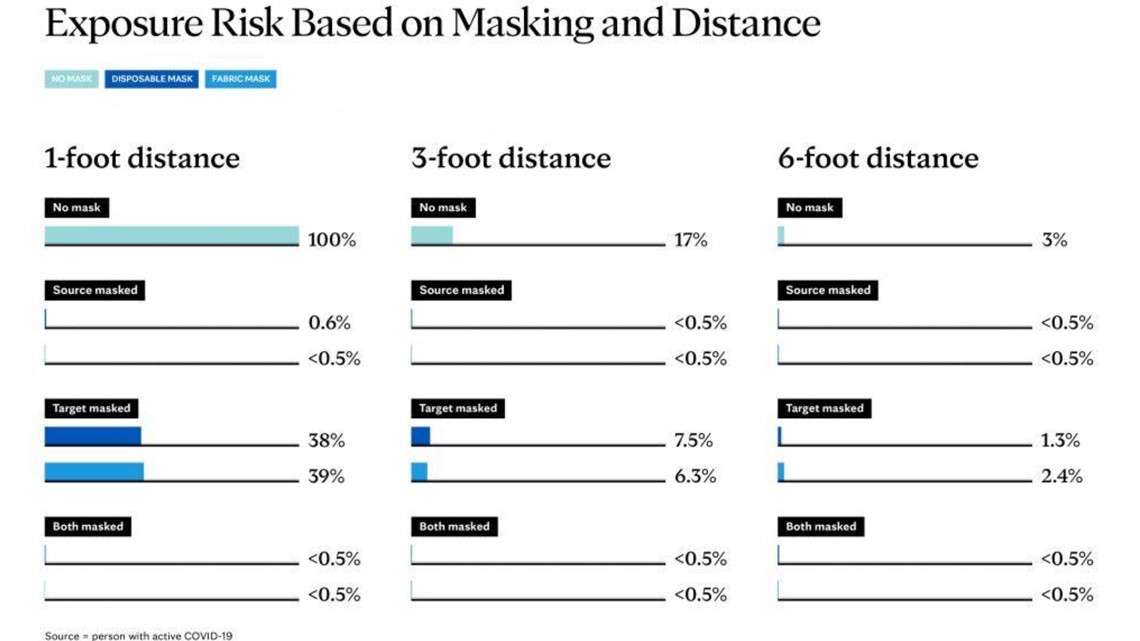
"No, they didn't," would likely be the response. "For instance, at 1 foot with the target masked, 38% made it through. See? Not effective." That's because we're not defining "effective" the same way. Mayo's test that showed that less than 0.5% of the virus made it through at 1 foot separation when both were masked. In this version of "effective," that does not constitute "effective" because it wasn't zero.
Sadly, we're once again back to the problem of language and definitions. Usually I've seen it on the Left, but this time it's the Right. When the Left does it, it's with ulterior motives. What are the ulterior motives of the anti-maskers? "We won't be told what to do." "I demand my liberty." "My face is the reflection of God's image." I don't know.
Sunday, February 21, 2021
Election
Now that we're past our recent "fun" presidential election (yes, that was sarcasm), I thought we should take a moment to look at ... election. In theological terms, the concept of Election is viewed by many (most?) as a Calvinist thing. For more than a few, "It's those extremists that came up with this thing." Unfortunately, that's simply not true. The Doctrine of Election is not a Reformed thing or a Calvinist thing; it's a Bible thing. It was Jesus who said, "Many are called, but few are chosen." (Matt 22:14) In fact, Jesus referred to "the elect" multiple times (e.g., Matt 24:22, 24, 31). It was Peter who wrote "You are a chosen race ..." (1 Peter 2:9). That particular epistle was written to "those who are elect exiles" (1 Peter 1:1) It was Paul who declared that God "chose us in Him before the foundation of the world ..." (Eph 1:4). The Doctrine of Election is not a 16th century invention. It's biblical.
Of course, it still begs the question. What is it, then, and how does it work? Well, the biblical references to "election" refer to God's choosing. That is, references to "the chosen" are identical to "the elect." Election, then, is God choosing who will, ultimately, be His. In that Ephesians 1:4 reference it says He "chose us in Him," referring to His Son. So election is connected to being "in Him" -- in Christ. Acts 13:48 tells of an event in which "as many as had been appointed to eternal life believed." Paul told the Thessalonians, "God has chosen you from the beginning for salvation" (2 Thess 2:13) which goes right along with that Ephesians 1:4 verse that includes "from before the foundation of the world." Thus, election, however it works, is "from before the foundation of the world."
Election and predestination are often used interchangeably. I'm not sure that's accurate. I think the predestination is broader, encompassing more than just being chosen to belong to God. However, predestination is certainly not less than being chosen for salvation. So in Romans Paul writes,
So what about that nasty "double predestination"? The suggestion is that if God predestines some to be chosen, He predestines others ... not to be chosen. And, in a sense, if election is true (as Jesus said it was), then double predestination is also true. However, all of election includes God's efforts to make us His own and none of the other side of predestination inludes God's actions at all. In choosing some to be His own, He works overtime, so to speak, while in not choosing the rest, He does nothing. He doesn't have to. He simply lets them choose their own path. So while "double predestination" is logically true, they are not actually equivalent or symmetrical. But the fact that God predestines some not to be chosen (simply by choosing who will be chosen) isn't merely a logical reality; it's a biblical one. In Revelation we read of "the dwellers on earth whose names have not been written in the book of life from the foundation of the world." (Rev 17:8) Note the parallel with those chosen "before the foundation of the world." Jude writes about "certain people" who "long ago were designated for this condemnation." (Jude 1:4) Scripture acknowledges, then, that there are those who, "from the foundation of the world," are not going to be saved, but are "designated for this condemnation." These people aren't forced to be condemned; they earn it like everyone else. But they are "long ago" (literally "before time") designated for this.
The Bible, then, is not unclear. God chose from before the foundation of the world whom He would save and whom He would let proceed on their chosen course. God only needed to intervene in the lives of the former and not the latter. The question remains, then, about the mechanism. How does He choose? We can find some answers, but probably not to your satisfaction. On one hand, He does not choose on our merits (Eph 2:8-9). He doesn't choose on the basis of being the best or the brightest (1 Cor 1:26-29). He doesn't even choose us for making the right choice (John 1:13; Rom 9:16). So how does He choose? Accoding to Scripture, He chooses "not because of our works but because of His own purpose and grace." (2 Tim 1:9) "He predestined us for adoption to Himself as sons through Jesus Christ, according to the purpose of His will." (Eph 1:5) We are "called according to His purpose." (Rom 8:28) Paul said that Jacob was chosen over Esau "in order that God's purpose of election might continue." (Rom 9:10-13)
Biblically, humans are by nature without hope of obtaining salvation (Eph 2:1-3; Rom 8:7; 1 Cor 2:14; etc.). All of us are destined by our sin nature to well deserved condemnation. It is, then, a complete surprise that "God, being rich in mercy, because of the great love with which He loved us, even when we were dead in our trespasses, made us alive together with Christ" (Eph 2:4-5). That wasn't obligation. It wasn't because we were so good or so lovable. It is all Him. It is for His good purposes. It is for His glory. And it's biblical.
Of course, it still begs the question. What is it, then, and how does it work? Well, the biblical references to "election" refer to God's choosing. That is, references to "the chosen" are identical to "the elect." Election, then, is God choosing who will, ultimately, be His. In that Ephesians 1:4 reference it says He "chose us in Him," referring to His Son. So election is connected to being "in Him" -- in Christ. Acts 13:48 tells of an event in which "as many as had been appointed to eternal life believed." Paul told the Thessalonians, "God has chosen you from the beginning for salvation" (2 Thess 2:13) which goes right along with that Ephesians 1:4 verse that includes "from before the foundation of the world." Thus, election, however it works, is "from before the foundation of the world."
Election and predestination are often used interchangeably. I'm not sure that's accurate. I think the predestination is broader, encompassing more than just being chosen to belong to God. However, predestination is certainly not less than being chosen for salvation. So in Romans Paul writes,
For those whom He foreknew He also predestined to be conformed to the image of His Son, in order that He might be the firstborn among many brothers. And those whom He predestined He also called, and those whom He called He also justified, and those whom He justified He also glorified. (Rom 8:29-30)For clarification, that begins with a "for" because it is an explanation of the previous thought -- that God causes all things to work together for good. This passage explains what that "good" is. You see, then, that predestination is 1) a biblical concept and 2) it is linked to (but not limited to) election. In this text it begins with God's foreknowledge (which, by the way, is not merely a term meaning "known in advance," but a more intimate term of knowing). From there predestination occurs. From predestination the calling happens followed by a string that begins with justification and ends with glorification without a break. So election -- being chosen to belong to God -- is a product of predestination, but predestination also includes the entire process and product -- to be conformed to the image of His Son.
So what about that nasty "double predestination"? The suggestion is that if God predestines some to be chosen, He predestines others ... not to be chosen. And, in a sense, if election is true (as Jesus said it was), then double predestination is also true. However, all of election includes God's efforts to make us His own and none of the other side of predestination inludes God's actions at all. In choosing some to be His own, He works overtime, so to speak, while in not choosing the rest, He does nothing. He doesn't have to. He simply lets them choose their own path. So while "double predestination" is logically true, they are not actually equivalent or symmetrical. But the fact that God predestines some not to be chosen (simply by choosing who will be chosen) isn't merely a logical reality; it's a biblical one. In Revelation we read of "the dwellers on earth whose names have not been written in the book of life from the foundation of the world." (Rev 17:8) Note the parallel with those chosen "before the foundation of the world." Jude writes about "certain people" who "long ago were designated for this condemnation." (Jude 1:4) Scripture acknowledges, then, that there are those who, "from the foundation of the world," are not going to be saved, but are "designated for this condemnation." These people aren't forced to be condemned; they earn it like everyone else. But they are "long ago" (literally "before time") designated for this.
The Bible, then, is not unclear. God chose from before the foundation of the world whom He would save and whom He would let proceed on their chosen course. God only needed to intervene in the lives of the former and not the latter. The question remains, then, about the mechanism. How does He choose? We can find some answers, but probably not to your satisfaction. On one hand, He does not choose on our merits (Eph 2:8-9). He doesn't choose on the basis of being the best or the brightest (1 Cor 1:26-29). He doesn't even choose us for making the right choice (John 1:13; Rom 9:16). So how does He choose? Accoding to Scripture, He chooses "not because of our works but because of His own purpose and grace." (2 Tim 1:9) "He predestined us for adoption to Himself as sons through Jesus Christ, according to the purpose of His will." (Eph 1:5) We are "called according to His purpose." (Rom 8:28) Paul said that Jacob was chosen over Esau "in order that God's purpose of election might continue." (Rom 9:10-13)
Biblically, humans are by nature without hope of obtaining salvation (Eph 2:1-3; Rom 8:7; 1 Cor 2:14; etc.). All of us are destined by our sin nature to well deserved condemnation. It is, then, a complete surprise that "God, being rich in mercy, because of the great love with which He loved us, even when we were dead in our trespasses, made us alive together with Christ" (Eph 2:4-5). That wasn't obligation. It wasn't because we were so good or so lovable. It is all Him. It is for His good purposes. It is for His glory. And it's biblical.
Saturday, February 20, 2021
News Weakly - 2/20/21
Lose-Lose
As I'm sure you're all aware, Trump's impeachment was, again, dismissed. Although 7 Republicans voted with the 50 Democrats to convict, it wasn't enough for the 2/3's required to convict. So, what did we learn? For all the Trump haters, the impeachment is over; get over it. For all the Trump lovers, the impeachment was dropped, not overturned. Trump wasn't declared not guilty. Most of the Republicans that voted against convicting did so on a technicality -- you can't impeach a president who is not a president. So, Trump was not convicted and Trump was not exonerated. Lose-lose. What was the point again? Politics as usual.
Not in Safe Hands
Biden asked Congress for tougher gun laws including a ban on assault weapons. I'd be fine with a ban on assault weapons ... if they could figure out just what that means. There are seemingly endless definitions and the way we are going these days it doesn't matter how we define them today; tomorrow could be another thing. In 1964 they banned discrimination for "sex" meaning "being male or female" and today they've redefined it to mean "whatever your sexual preference or gender might be." Today they ban "assault weapons" like machine guns and tomorrow they might include baseball bats because "someone used a baseball bat as a weapon to assault someone." You just can't tell in a society so prone to insanity.
Looks Bad
Governor Cuomo's aide admitted to covering up 13,000 deaths in nursing homes and Cuomo concurred. New York had a policy of sending elderly COVID patients back to their nursing homes rather than isolating them, obviously increasing the number of deaths in nursing homes. They opted to lie about it rather than face up to it and deal with it. As long as you can lie to the public, the scandal never happened. Certainly looks bad for a "liberal" governor who wasn't being very "generous" with his people.
Missing the Point
In a mindless shooting in Philadelphia, a gunman shot 8 apparently random people, killing one. Mayor Jim Kenney wrote, "Today's mass shooting near the Olney Transportation Center, in broad daylight, is yet another tragic example of the vicious, outrageous, and unacceptable gun violence epidemic that's threatening the lives and safety of our fellow Philadelphians." Yes, this is about the presence of guns, not the crazy people that use them for irrational and outrageous purposes. It's the guns that are the problem. And if we can just get these guns away from the American public, we're pretty sure that irrational and outrageous people will straighten right up. It would only make sense, I suppose, if Cuomo would blame his pen for making him sign the order that killed thousands of nursing home patients.
Polar Opposite
The Mayor of Colorado City, Texas, resigned this week after lashing out at his constituents who were asking for help in the cold crisis. "No one owes you or your family anything," he wrote in social media, "nor is it the local government's responsibility to support you during trying times like this! Sink or swim, it's your choice! The City and County, along with power providers or any other service owes you NOTHING!" Unfortunate contrast to the liberal side that is intent on controlling every aspect of our lives.
In Other News
While Texans complain about global warming -- "If this global warming keeps up, we're all going to freeze to death" -- Ted Cruz hustled to Cancun to lasso the sun and return it to Texas. Meanwhile, the party of love and progress is celebrating the death of Rush Limbaugh.
Must be true; I read it on the Internet.
Friday, February 19, 2021
Benefits of a Pandemic
We all know that a horrible pandemic is ravaging our world, threatening everyone's lives, and wreaking havoc all around. "We're all going to die!" one fellow complained to me. Well, yes, he's technically accurate, just not from COVID. We've seen (obviously) health trauma and economic trauma and emotional trauma. Of real concern is the decline of church attendance. From being locked out to thinking that a switch to "virtual church" is suitable, a lot of people that used to go to church may not anymore.
So is it all bad news? I don't think so. While the tail end of 2020 and the start of 2021 saw a run up in numbers worldwide, we've seen a decline in both new cases and deaths lately. The horror stories of how "everyone is getting it" aren't actually accurate. Incidence rates are around 10%, up from the earlier 2% but not approaching the 50% of the Spanish flu pandemic. And of those who do get it, fatality rates are still generally less than 2%. It's not all horrible. Still, I would argue a little bit further. I'd argue that there have actually been some benefits from this malignant virus.
Environmental
It's odd to consider the positive effects a deadly worldwide pandemic has had on what we have considered for a few years now our greatest threat -- environmental issues. "Global climate change" is the faceless enemy to many and, arriving to save the day, as it were, COVID-19 rides in with solutions. We've stopped traveling as much, stopped moving as much, stopped doing as much, and we've seen a 25% decrease in carbon emissions and a 50% decrease in notrogen oxides emissions. One scientist has estimated this has saved 77,000 lives over two months. Air quality has improved. Water quality has improved. There have been reports of wildlife spotted in cities. One think tank believes that the pandemic may have pushed the fossil fuel industry into "terminal decline" with the decrease in demand for such products while, on the other hand, bike sales surged. Adobe reported a 50% increase in PDF documents, deccreasing the use of paper. There are more than a few effects on our environment that aren't all bad.
Family Relations
I know more than a few elderly people who were once alone -- tucked away in retirement homes or on their own in their own homes -- who are not anymore. I know more than a few whose adult children have moved them into their homes or have moved in with their aging parents to take care of them. In a culture that values "me time" over "you time," this is remarkable. In a society that intentionally aimed to put to death the "nuclear family" -- the "multigenerational home" -- I think this is a positive.
Beyond this, because of COVID fears and quarantines and enforced isolation, families that were once "scattered abroad" doing their own thing have been forced to share the same limited space, being forced in turn to get used to it and maybe even like it. When choices are limited, it turns out the intolerable may not be as bad as we thought.
Changed Values
I've been fascinated at some of the conversations and interviews I've seen. Traditionally, kids loved summer vacation and hated going back to school. Once established as a tradition, it reinforced itself into "You must hate school if you're going to be cool." Now these interviews and conversations are saying something different. Kids want to go back to school. They miss their friends and their teachers. They see value to learning. It has been fun to watch.
That is one example of the shift in values that we're seeing. When we were unhindered, we were scattered in our values. Fun was highest on most lists; not as much now. Life has become more important when so many have lost it. Freedom was our mainstay before, but now we're willing to give up freedoms for a new, higher value -- safety. Independence was important, but now we're learning that dependence is also something worth embracing.
There are still people with the same values. "Me" is still prevalent. And, yet, I've also seen some people who have shifted some on that point. I know people who, personally opposed to wearing masks, for instance, still do so because it benefits others who are not opposed. People who are very uncomfortable in those strangulation devices still don them if it makes someone who is scared feel safer. That's a shift in values. A good one.
Then there are those church people. While it is true that many won't be back, it's also true that another group of church-goers have developed a new love for going to church. Originally locked out, now, like those school kids who suddenly find they really need to be there, some have discovered that being connected in close proximity to God's people is much more vital than they realized before. They took it for granted when it was readily available, but now it has become critical.
Life
It has been touching to see a change in the sense of the fragility of life. For most of us death is mostly remote. It happens to someone else or to someone else's loved ones. Sure, that's not accurate, but it's the feeling many have. When you add half a million American deaths to the mix where seemingly healthy people are suddenly dead and gone, it has an effect. When a mother or a father or a spouse who was "too young to die" is suddenly gone like that -- specifically in large numbers like that -- it changes your perspective. Life becomes more personal and more valuable. We mourn the dead and embrace the living more. That's not a bad thing.
Theology
There is one other effect. Crises like these act as a winnowing. They serve to crystallize our theology. What do I really believe about God? They remove the chaff from the wheat. They shake loose the false from the true, the imposter from the authentic. While we can cruise along okay without crisis, these kinds of things either crowd us closer than ever to the Sovereign Lord or clearly display that no such relationship existed before. In some of the latter, it is a wake up call to get that remedied for themselves. In others, it serves as notification to those believers around them that someone we thought was a fellow believer is not, so we can now get to work on evangelizing the "saved."
A pandemic is not pleasant and not fun. It's not something we like. But I have it on good authority that "for those who love God all things work together for good, for those who are called according to His purpose." (Rom 8:28) While we face suffering and hardships, His good plan continues. It is another illustration that what God's enemies intend for evil He intends for good (Gen 50:20). If we can just settle on that and get ourselves firmly rooted in that, I think we'll find that these kinds of things can be a source of supernatural joy, knowing that "the testing of your faith produces steadfastness," and steadfastness perfects and completes us (James 1:3-4).
Thursday, February 18, 2021
Doublethink
Somebody mentioned "doublethink" the other day. You remember that, right? It was from Orwell's 1984, part of the government's aim to control thought. If you could require them to accept words as meaning contradictory things, you could begin to control their thinking. Like their mantra: "War is peace, Freedom is slavery, Ignorance is strength."
It is chilling on one hand and, yet, almost expected on the other to realize that they're doing it today ... on a regular basis. For instance, they use "women's choice" to indicate "killing babies." "Oh, no they don't," some will object. "They don't think of them as babies." Yes, that's what they say, but when a woman "loses her baby" to miscarriage or, worse, violence, it's a baby, isn't it? Doublethink.
They are blatant about it in their drive for inclusivity that requires excluding those who disagree. Recently the House started their new session with H.R. 8, a rule for "gender inclusivity" that is accomplished ... by removing gender. In the document they list specifics: "father, mother, son, daughter, brother, sister, uncle, aunt, ... nephew, niece, husband, wife, father-in-law, mother-in-law, son-in-law, daughter-in-law, brother-in-law, sister-in-law, stepfather, stepson, stepdaughter, stepbrother, step sister, half brother, half sister, grandson, granddaughter." Out. Because, you see, inclusivity requires exclusivity. Doublethink.
Those are just two glaring examples of the day. I'd bet you could come up with a couple of your own if you're not too immersed in doublethink.
Orwell's 1984 was a dystopian novel about a totalitarian government aiming at mind control. Using fear and punishment on one hand and doublethink and control of the language on the other, they set out with apparent success to gain control over a populace who embraced their overlords. Claiming to be wise, they became fools. The story serves as a model for us today. We only have to ask if it's a model we want to follow or avoid. Currently our societal arc is to embrace rather than to evade.
Wednesday, February 17, 2021
Anthropocentric
It's a fancy-sounding word -- "anthropocentric." It rolls off the tongue like a lead balloon. But hopefully you can see what it means. It refers to a worldview that puts Man at the center. Not men; Man. Mankind. Human beings. And, of course, if we're honest, by "man-centered" we mean "me." Humans as a whole believe that we are the point, the issue, the reason for everything. If we are philosophical atheists, we carefully prove that everything is meaningless ... except, of course, for us. If we are ardent theists, we argue diligently for the existence of a God ... whose highest concern is us. Genuine, sincere, Bible-believing Christians will admit at times that if God doesn't love them like they demand, then He's not God. Because at the core we all tend to be anthropocentric.
I suppose, in a sense, it is the definition of sin. Or, better, maybe, the sin nature. It is in our sin nature to choose to be supreme, to choose to be God. It was the serpent's temptation at the beginning. "For God knows that when you eat of it your eyes will be opened, and you will be like God, knowing good and evil." (Gen 3:5) Claiming to be wise, we became fools and exchanged the Creator for the creature, the truth for a lie.
And now it's our abode. It's where we live. These days, for instance, we're told that if we don't embrace "their identity", whatever that might be, we're haters because, above all else, we are anthropocentric to the core. It's about "me" and you will submit. Even God considers us more important than Himself. I know ... sounds silly, but I've heard it again and again from dedicated believers. And if He does not submit, we are going to have a problem with Him.
It is so much a part of our core, placing God as subservient in some way to Man. We think He is just like us (Psa 50:21). It's an easy mistake to make because it's buried so deeply in us, but it is a mistake, and in so doing we fall short of the glory of God. Escaping the grips of this pervasive perception is a long and hard process, but just because it's difficult doesn't mean we ought not embark on the trip. Our task as believers is to elevate God to His rightful position. Perhaps we should do the hard work of doing that in our own hearts and minds first.
Subscribe to:
Posts (Atom)