Memorial Day, I often like to tell the stories of Medal of Honor recipients. Meet Louis Cukela, one of the very few who won both the Army and the Navy Medal of Honor awards for the same action.
On July 18, 1918, deep in the smoke‑choked Forest de Retz near Villers‑Cotterêts, the 5th Marines found themselves pinned to the earth. German machine guns, hidden in a fortified nest ahead, swept the woods with fire so constant it seemed to stitch the very air shut. Every attempt to advance ended the same way—splinters, dirt, and bullets exploding around the men until they hugged the ground again. The line had stalled, and the Germans knew it.
Among the Marines was Louis Cukela, a stocky, sharp‑tongued immigrant from the Balkans whose reputation for fearlessness was already the stuff of barracks legend. He studied the German position for a moment, then—without announcement, without drama—simply dropped to his belly and began crawling forward.
His comrades shouted for him to stop. The fire was too heavy. The move was suicide. But Cukela kept going, inching through the brush, slipping from crater to crater, working his way not toward the front of the strongpoint but around it. He crawled so close to the German lines he could hear the gunners shouting over their own weapons.
When he reached the rear of the position, he rose in a sudden burst of motion and charged. The Germans never saw him coming. In the chaos that followed—bayonet, rifle, and raw aggression—Cukela overwhelmed the machine‑gun crew. Some fell where they stood; others fled into the dugout below.
Inside the emplacement, Cukela found a cache of German grenades. He grabbed several, yanked the cords, and tossed them into the dugout. When the smoke cleared, four stunned German soldiers stumbled out with their hands raised. Cukela marched them back toward the Marine lines, leaving behind a silent machine‑gun nest that had, moments earlier, held up an entire company.
With the obstacle gone, the Marines surged forward again. What dozens of men could not do under fire, Louis Cukela had done alone—through audacity, instinct, and a complete disregard for his own safety.
For that single action, both the U.S. Army and the U.S. Navy awarded him the Medal of Honor, making him one of the rare double recipients in American history. He survived the war, served for decades more, and retired as a Marine Corps major. But his legend rests most firmly on that morning in the Forest de Retz, when one Marine decided that if the enemy wouldn’t move, he would.
Showing posts with label Memorial Day. Show all posts
Showing posts with label Memorial Day. Show all posts
Monday, May 25, 2026


Monday, May 26, 2025
Memorial Day, 2025
Since Memorial Day is specifically to remember those who gave their lives in service to this country, and since I like to recall Medal of Honor recipients on this day, I thought I'd just tell some of those who received it posthumously.
Freddie Stowers served in France during World War I. His company was advancing in the Ardennes region when the Germans faked surrender, then eliminated half of the company in a barrage of gunfire. Stowers marshaled the platoon he just inherited and led them to eliminate a German trench line. Then he took the remaining members and assaulted a second line. Stowers was shot twice, but urged his men to keep going. He died, but they took the trench line and the hill.
Here's one you might not expect. Ben Salomon served as a dentist in World War II. He was working in an aid station in Saipan in 1944 when the Japanese overran the front line and headed toward the station. Salomon ordered everyone out while he covered their retreat. When the Army returned to the scene, they found Salomon's body slumped over a machine gun with 98 dead Japanese in front of him. He had been shot 24 times before he died.
William Pitsenbarger served in Vietnam. He was in the Air Force as a Pararescue, risking his life nearly daily pulling fellow service members to safety. In 1966 he took part in an operation to evacuate a group of injured soldiers. He was lowered to the ground and secured 6 injured, then waited while they left to an aid station. When the returning copter took small arms fire, he waved them off. For 90 minutes he tended the wounded and dispersed ammunition then helped fend off the Viet Cong. He was killed by a sniper that night, but he managed to save 9 more soldiers before he died.
Over and over Americans have faced dire circumstances defending freedom and stood the test. Some died doing it. These gave selflessly and at great cost for something more than themselves. We could certainly use a reminder of this kind of attitude ... probably more than once a year.
Freddie Stowers served in France during World War I. His company was advancing in the Ardennes region when the Germans faked surrender, then eliminated half of the company in a barrage of gunfire. Stowers marshaled the platoon he just inherited and led them to eliminate a German trench line. Then he took the remaining members and assaulted a second line. Stowers was shot twice, but urged his men to keep going. He died, but they took the trench line and the hill.
Here's one you might not expect. Ben Salomon served as a dentist in World War II. He was working in an aid station in Saipan in 1944 when the Japanese overran the front line and headed toward the station. Salomon ordered everyone out while he covered their retreat. When the Army returned to the scene, they found Salomon's body slumped over a machine gun with 98 dead Japanese in front of him. He had been shot 24 times before he died.
William Pitsenbarger served in Vietnam. He was in the Air Force as a Pararescue, risking his life nearly daily pulling fellow service members to safety. In 1966 he took part in an operation to evacuate a group of injured soldiers. He was lowered to the ground and secured 6 injured, then waited while they left to an aid station. When the returning copter took small arms fire, he waved them off. For 90 minutes he tended the wounded and dispersed ammunition then helped fend off the Viet Cong. He was killed by a sniper that night, but he managed to save 9 more soldiers before he died.
Over and over Americans have faced dire circumstances defending freedom and stood the test. Some died doing it. These gave selflessly and at great cost for something more than themselves. We could certainly use a reminder of this kind of attitude ... probably more than once a year.
Monday, May 27, 2024
Memorial Day, 2024
Veterans Day is for recognizing all who served in any capacity in the military. Memorial Day is not. Memorial is specifically designed to commemorate those who gave their lives in military service to this country. "Commemorate" ... an interesting word. I'm sure you can see the connection to "memory," right? We use the word to celebrate or show respect, but the root meaning is to "call to remembrance." And that's really what Memorial Day is intended to do ... remind us, specifically of those who gave all.
Mary Walker, to date, is the only female Medal of Honor recipient. Dr. Walker served in the Union army as a field surgeon, providing medical aid to Union soldiers, civilians ... and Confederate soldiers alike. She would cross enemy lines to help Confederate surgeons, and she would do it alone since none of the brave men with her had the courage to do it. Eventually she was arrested as a spy by Confederate forces and spent 4 months in prison before being released. For her courage, she was awarded the Medal of Honor.
One of the recipients from World War I was Corporal Jake Allex. Engaged in a fierce battle in France, all of Allex's platoon officers became casualties after coming into range of a German machine gun nest. Lacking direction from leadership, Allex took rifle in hand and advanced alone toward the nest, firing until he ran out of ammunition. Then he charged and attacked the 20 enemy soldiers with his bayonet, killing 5, and subduing the rest with his rifle butt until they were captured.
In World War II at the Battle of the Bulge, Army Private James Hendrix (no relation to the guitar player) was part of a leading element attempting to break through German lines at Bastogne. At one point, in a hail of artillery and small arms fire, Hendrix dismounted from his half-track and walked alone toward two German 88 mm guns. Firing his rifle, he forced the gun crews to take cover and then surrender. Later that day, he left his vehicle again to assist two wounded soldiers caught in a crossfire. His counter-fire gave them sufficient time to get to safety. Later that same day, Hendrix voluntarily braved mines, guns, and snipers to reach a fellow soldier in a burning vehicle. Hendrix dragged him to safety and put out his flaming clothing before the vehicle exploded.
To date there are 3,520 Medal of Honor winners. Nineteen of them won two. They came from all services and all walks of life. Many received them posthumously. Of the 3,520 recipients, 61 are still alive. As the saying goes, all gave some, and some gave all. Today we honor those who gave their lives for something higher than themselves. We owe them a debt of gratitude.
Mary Walker, to date, is the only female Medal of Honor recipient. Dr. Walker served in the Union army as a field surgeon, providing medical aid to Union soldiers, civilians ... and Confederate soldiers alike. She would cross enemy lines to help Confederate surgeons, and she would do it alone since none of the brave men with her had the courage to do it. Eventually she was arrested as a spy by Confederate forces and spent 4 months in prison before being released. For her courage, she was awarded the Medal of Honor.
One of the recipients from World War I was Corporal Jake Allex. Engaged in a fierce battle in France, all of Allex's platoon officers became casualties after coming into range of a German machine gun nest. Lacking direction from leadership, Allex took rifle in hand and advanced alone toward the nest, firing until he ran out of ammunition. Then he charged and attacked the 20 enemy soldiers with his bayonet, killing 5, and subduing the rest with his rifle butt until they were captured.
In World War II at the Battle of the Bulge, Army Private James Hendrix (no relation to the guitar player) was part of a leading element attempting to break through German lines at Bastogne. At one point, in a hail of artillery and small arms fire, Hendrix dismounted from his half-track and walked alone toward two German 88 mm guns. Firing his rifle, he forced the gun crews to take cover and then surrender. Later that day, he left his vehicle again to assist two wounded soldiers caught in a crossfire. His counter-fire gave them sufficient time to get to safety. Later that same day, Hendrix voluntarily braved mines, guns, and snipers to reach a fellow soldier in a burning vehicle. Hendrix dragged him to safety and put out his flaming clothing before the vehicle exploded.
To date there are 3,520 Medal of Honor winners. Nineteen of them won two. They came from all services and all walks of life. Many received them posthumously. Of the 3,520 recipients, 61 are still alive. As the saying goes, all gave some, and some gave all. Today we honor those who gave their lives for something higher than themselves. We owe them a debt of gratitude.
Monday, May 30, 2022
Memorial Day, 2022
We all enjoy a good holiday, but too many of us don't quite know what it's about. Memorial Day is one of those. Many are not quite clear on the difference between Veterans Day and Memorial Day. Veterans Day celebrates all who served, and we thank them. None of those we honor on Memorial Day are around to be thanked. This day we set aside to appreciate those who gave their lives for our freedom. On this day, I like to pull out Congressional Medal of Honor stories. Some are remarkable. Here are two of them.
William Hawkins was a Marine at the Battle of Tarawa in 1943. His platoon was pinned down on Betio Island. Wounded by shrapnel, Hawkins advanced to single-handedly take out six machine gun nests. When he ran out of ammunition, he threw grenades and satchel charges. On the seventh nest he was wounded in the chest but managed to destroy it. A medic patched him up and told him to leave, but he refused. He was shot and killed hurling a grenade into the eighth machine gun nest. His last words were, "Boys, I sure hate to leave you like this."
Jason Dunham was a Marine corporal serving in Iraq in 2004. His patrol was ordered to intercept some cars exiting a fire fight. As he approached a vehicle to search it, an insurgent jumped out and wrestled with him. He took him to the ground, then saw that the insurgent had pulled the pin on a grenade and dropped it. Without hesitation, Cpl Dunham put his helmet over it and covered it with his body. He saved the lives of the two Marines with him, but died from his wounds eight days later.
People have done extraordinary things in defense of the country they love and the people with whom they serve. These things serve as rare glimpses into people who can put themselves behind others in importance and seek their best instead, sometimes at the cost of their own lives. These are the people we honor on Memorial Day. Not all Medal of Honor recipients died in action. These did. All of them went above and beyond, but not all went so far as to die for their cause. These did. We appreciate that level of sacrifice. Or, at least, we ought to.
William Hawkins was a Marine at the Battle of Tarawa in 1943. His platoon was pinned down on Betio Island. Wounded by shrapnel, Hawkins advanced to single-handedly take out six machine gun nests. When he ran out of ammunition, he threw grenades and satchel charges. On the seventh nest he was wounded in the chest but managed to destroy it. A medic patched him up and told him to leave, but he refused. He was shot and killed hurling a grenade into the eighth machine gun nest. His last words were, "Boys, I sure hate to leave you like this."
Jason Dunham was a Marine corporal serving in Iraq in 2004. His patrol was ordered to intercept some cars exiting a fire fight. As he approached a vehicle to search it, an insurgent jumped out and wrestled with him. He took him to the ground, then saw that the insurgent had pulled the pin on a grenade and dropped it. Without hesitation, Cpl Dunham put his helmet over it and covered it with his body. He saved the lives of the two Marines with him, but died from his wounds eight days later.
People have done extraordinary things in defense of the country they love and the people with whom they serve. These things serve as rare glimpses into people who can put themselves behind others in importance and seek their best instead, sometimes at the cost of their own lives. These are the people we honor on Memorial Day. Not all Medal of Honor recipients died in action. These did. All of them went above and beyond, but not all went so far as to die for their cause. These did. We appreciate that level of sacrifice. Or, at least, we ought to.
Monday, May 31, 2021
Memorial Day, 2021
More than 3500 individuals have been awarded the military's highest honor, the Medal of Honor. Only around 100 are currently alive. First authorized in 1861, it was first awarded to an Army Private named Jacob Parrott. He was part of some Union volunteers who road a train into Georgia, stole the train at a stop, and wreacked havoc on the rails until they were caught.
Then there was Dr. Mary Walker, a Union field surgeon at a time when women weren't allowed to serve or even be doctors. Still, she treated civilians and soldiers regardless of their associations. She was shot at and even captured, but she kept it up. The award was rescinded in 1917 and restored in 1977 and Mary remains the first woman to receive it.
During a suprise attack of Japanese forces one night in Iwo Jima, Corporal Charles Berry found himself juggling grenades. Japanese soldiers would lob them into his foxhole and he'd scoop them up and throw them back. When he was unable to reach one in time, he dove on top of it and took the blast to save the men in the foxhole with him.
PFC Bryant Wornack was drafted at 18 and sent to Korea with a medical company. On foot patrol his squad was outnumbered. He was wounded but went on treating wounds, refusing medical attention himself. At one point, a mortar shell exploded near him and took off his right arm. He didn't stop, but continued to direct others to help the wounded until he passed out from blood loss.
Sgt Matthew Leonard served in both Korea and Vietnam. In 1967 he took command of a foot patrol when his commander was wounded. He set up a defensive perimeter and fought off the first assault. When he saw a wounded man outside of the perimeter, he crawled to drag him to safety, getting wounded by a sniper in the process. When the enemy set up a machine gun to finish off the squad, he charged the emplacement receiving multiple mortal wounds and killed the gunners. He killed several more enemy soldiers before succumbing to his wounds.
MSgt Roy Benavidez is a particularly outstanding story. In 1965 he was evacuated to the U.S. from Vietnam after stepping on a landmine. They told him he would never walk again, but he was back in Vietnam in 1968. On May 2, 1968, Benavidez jumped from a helicopter armed only with a knife to help 12-man Special Forces patrol surrounded by 1000 enemy soldiers. Shot seven times, wounded with shrapnel, and stabbed in multiple places, Benavidez managed to save the lives of 8 of his comrades. At one point he was stabbed with a bayonet which he proceeded to extract from his body and turn it to stab the attacking soldier. When it was all over, the doctor was zipping up the body bag when Benavidez spat in his face, letting him know he was still alive. He recovered and retired in 1976.
That's five -- five of the more than 3500 stories of outstanding bravery, heroism, and honor from those who have served with distinction in the U.S. Armed Forces. They acted in keeping with the most cherished traditions of the military service and reflected utmost credit on themselves and the U.S. military. Men, women, all colors and creeds, from all walks of life and in all places that the military fought, there have always been people of valor who have been willing to give all for higher than themselves. It is these and more that we honor on Memorial Day.
During a suprise attack of Japanese forces one night in Iwo Jima, Corporal Charles Berry found himself juggling grenades. Japanese soldiers would lob them into his foxhole and he'd scoop them up and throw them back. When he was unable to reach one in time, he dove on top of it and took the blast to save the men in the foxhole with him.
PFC Bryant Wornack was drafted at 18 and sent to Korea with a medical company. On foot patrol his squad was outnumbered. He was wounded but went on treating wounds, refusing medical attention himself. At one point, a mortar shell exploded near him and took off his right arm. He didn't stop, but continued to direct others to help the wounded until he passed out from blood loss.
Sgt Matthew Leonard served in both Korea and Vietnam. In 1967 he took command of a foot patrol when his commander was wounded. He set up a defensive perimeter and fought off the first assault. When he saw a wounded man outside of the perimeter, he crawled to drag him to safety, getting wounded by a sniper in the process. When the enemy set up a machine gun to finish off the squad, he charged the emplacement receiving multiple mortal wounds and killed the gunners. He killed several more enemy soldiers before succumbing to his wounds.
MSgt Roy Benavidez is a particularly outstanding story. In 1965 he was evacuated to the U.S. from Vietnam after stepping on a landmine. They told him he would never walk again, but he was back in Vietnam in 1968. On May 2, 1968, Benavidez jumped from a helicopter armed only with a knife to help 12-man Special Forces patrol surrounded by 1000 enemy soldiers. Shot seven times, wounded with shrapnel, and stabbed in multiple places, Benavidez managed to save the lives of 8 of his comrades. At one point he was stabbed with a bayonet which he proceeded to extract from his body and turn it to stab the attacking soldier. When it was all over, the doctor was zipping up the body bag when Benavidez spat in his face, letting him know he was still alive. He recovered and retired in 1976.
That's five -- five of the more than 3500 stories of outstanding bravery, heroism, and honor from those who have served with distinction in the U.S. Armed Forces. They acted in keeping with the most cherished traditions of the military service and reflected utmost credit on themselves and the U.S. military. Men, women, all colors and creeds, from all walks of life and in all places that the military fought, there have always been people of valor who have been willing to give all for higher than themselves. It is these and more that we honor on Memorial Day.
Monday, May 28, 2018
Memorial Day, 2018
It's another Memorial Day and I'm offering a few more stories of Medal of Honor recipients.
I'm sure you've heard of General George Custer, but you may not have heard of Captain Thomas Custer. He was the first soldier to receive two Medals of Honor, both in the Civil War. The first was awarded when he led a cavalry charge over a barricade under fire, seized the Confederate flag, and captured 3 officers and 11 soldiers. Three days later, he charged again, leaping his horse over a barricade and singlehandedly breaking the Confederate line. Then he spotted the flag-bearer. As he charged, the soldier shot him in the face. He recovered quickly and killed the flag-bearer. He presented the flag to his brother, General George Custer, who had him arrested for ignoring an order to report to the surgeon. Captain Custer survived the Civil War and later died at the Battle of Little Bighorn with his two brothers.
Major Charles Watters served in Vietnam. He was not a soldier; he was a chaplain. He was on the move with a company in the vicinity of Dak To when they engaged a heavily armed enemy battalion. Now, chaplains weren't armed, but Major Watters didn't seem to notice. He rushed to the front line to aid and evacuate the wounded, give encouraging words, and offer last rites for the dying. At one point he bodily picked up an exposed soldier in shock and carried him all the way to safety. At another he ran into the crossfire of friendly and enemy fire to retrieve two wounded soldiers. After the battalion had established a perimeter, Watters noticed several wounded outside the perimeter. Despite attempts to stop him, he exposed himself three times to enemy fire to assist all the wounded to safety. Once all were clear, he assisted medics with field bandages and serving food and water and spiritual support. Eventually, making his rounds at the perimeter to aid the wounded he was mortally wounded. Chaplain Watters' "unyielding perseverance and selfless devotion to his comrades was in keeping with the highest traditions of the U.S. Army."
Did you see the movie, Blackhawk Down? It was about a couple of Blackhawk helicopters that were shot down in Mogadishu, Somalia, during a raid when the military tried to capture a faction leader. The movie was based on true events. If you saw it, you will surely remember MSgt Gary Gordon and SFC Randall Shughart. Oh, maybe not by name, but certainly by their bravery. The two were providing sniper overwatch from a helicopter when the second copter went down. Realizing they were stranded and couldn't be helped, the two volunteered to be dropped in to assist the trapped crew. Armed only with sniper rifles and pistols, they sprinted nearly 100 yards from their drop point under fire from hundreds of militia to the crash sight. They dragged the critically injured crew members to safety, then set up an exposed defensive perimeter to defend the crew -- just the two of them. They killed an unknown number of assailants while holding off the militia. Though their ammunition was running low, they provided ammo to the pilot for self defense. When Shughart was fatally wounded and Gordon's rifle was out of ammo, he went back to the wreckage, retrieved a rifle and five rounds of ammunition, and gave it to the pilot. "Good luck," he said. Then armed with only his pistol, he continued to hold them off until he was killed. They were credited with saving the life of the pilot.
We have a long history of brave people who thought less of their own lives and more of others. They have earned our thanks.
I'm sure you've heard of General George Custer, but you may not have heard of Captain Thomas Custer. He was the first soldier to receive two Medals of Honor, both in the Civil War. The first was awarded when he led a cavalry charge over a barricade under fire, seized the Confederate flag, and captured 3 officers and 11 soldiers. Three days later, he charged again, leaping his horse over a barricade and singlehandedly breaking the Confederate line. Then he spotted the flag-bearer. As he charged, the soldier shot him in the face. He recovered quickly and killed the flag-bearer. He presented the flag to his brother, General George Custer, who had him arrested for ignoring an order to report to the surgeon. Captain Custer survived the Civil War and later died at the Battle of Little Bighorn with his two brothers.
Major Charles Watters served in Vietnam. He was not a soldier; he was a chaplain. He was on the move with a company in the vicinity of Dak To when they engaged a heavily armed enemy battalion. Now, chaplains weren't armed, but Major Watters didn't seem to notice. He rushed to the front line to aid and evacuate the wounded, give encouraging words, and offer last rites for the dying. At one point he bodily picked up an exposed soldier in shock and carried him all the way to safety. At another he ran into the crossfire of friendly and enemy fire to retrieve two wounded soldiers. After the battalion had established a perimeter, Watters noticed several wounded outside the perimeter. Despite attempts to stop him, he exposed himself three times to enemy fire to assist all the wounded to safety. Once all were clear, he assisted medics with field bandages and serving food and water and spiritual support. Eventually, making his rounds at the perimeter to aid the wounded he was mortally wounded. Chaplain Watters' "unyielding perseverance and selfless devotion to his comrades was in keeping with the highest traditions of the U.S. Army."
Did you see the movie, Blackhawk Down? It was about a couple of Blackhawk helicopters that were shot down in Mogadishu, Somalia, during a raid when the military tried to capture a faction leader. The movie was based on true events. If you saw it, you will surely remember MSgt Gary Gordon and SFC Randall Shughart. Oh, maybe not by name, but certainly by their bravery. The two were providing sniper overwatch from a helicopter when the second copter went down. Realizing they were stranded and couldn't be helped, the two volunteered to be dropped in to assist the trapped crew. Armed only with sniper rifles and pistols, they sprinted nearly 100 yards from their drop point under fire from hundreds of militia to the crash sight. They dragged the critically injured crew members to safety, then set up an exposed defensive perimeter to defend the crew -- just the two of them. They killed an unknown number of assailants while holding off the militia. Though their ammunition was running low, they provided ammo to the pilot for self defense. When Shughart was fatally wounded and Gordon's rifle was out of ammo, he went back to the wreckage, retrieved a rifle and five rounds of ammunition, and gave it to the pilot. "Good luck," he said. Then armed with only his pistol, he continued to hold them off until he was killed. They were credited with saving the life of the pilot.
We have a long history of brave people who thought less of their own lives and more of others. They have earned our thanks.
Monday, May 25, 2015
Memorial Day, 2015
What is bravery? Many think that it is the lack of fear. This isn't the case. Bravery is the willingness to face and endure danger. It is fear managed.
Memorial Day is a special day set aside to honor those who gave their lives in defense of our freedom. In this we honor the brave.
It's people like Sgt Dennis Weichel. In March of 2012 he was a Rhode Island National Guarsdman serving in the Laghman Province of Afghanistan. While riding in a convoy, he spotted some Afghan children picking up shell casings on the road. They would sell them to make money. Weichel got out to clear them from the convoy's path and most went, but one young girl ran back for one more shell. Weichel saw that she was in the path of a heavy armored truck. He intervened and succeeded in saving her from being crushed, but was run over himself. His fellow soldiers said that was just the kind of guy he was.
It's people like Major Kenneth Bailey. He served in the Marines in World War II. In September of 1942 he was on Guadalcanal defending the critically important airfield. His battalion was attacked on the right flank, but he held them off even after the main enemy group attacked. Facing superior enemy forces, Bailey rallied the troops in danger of taking flight and, with severe head wound, led his men in hand-to-hand combat to repulse the enemy and hold the field. Major Bailey died in the fight, but his undaunted courage inspired his men to hold out.
It's people like Captain Hilliard Wilbanks. Capt. Wilbanks served in the Air Force in Vietnam in a particularly hazardous role. He was an FAC, a forward air controller flying an unarmed aircraft over enemy locations to ensure accuracy of targeting and safety for nearby friendly troops. On one particular mission Wilbanks discovered a well-concealed and numerically superior hostile force preparing to ambush advancing rangers. Discovered, the Viet Cong attacked and pinned down the rangers. Capt. Wilbanks ignored the fact that his aircraft was unarmed and taking heavy ground fire and flew low over the advancing enemy inflicting casualties with the rifle he carried and fired out the side window. He repeatedly made low passes firing into the enemy until the rangers could withdraw to safety. Mortally wounded and flying a doomed aircraft, he crashed between the two forces and died on while being evacuated, having saved numerous friendly troops facing overwhelming forces.
This day, Memorial Day, is specifically set aside to honor that kind of bravery in people who served in the military and gave their lives on behalf of a grateful nation. Worth remembering.
Memorial Day is a special day set aside to honor those who gave their lives in defense of our freedom. In this we honor the brave.
It's people like Sgt Dennis Weichel. In March of 2012 he was a Rhode Island National Guarsdman serving in the Laghman Province of Afghanistan. While riding in a convoy, he spotted some Afghan children picking up shell casings on the road. They would sell them to make money. Weichel got out to clear them from the convoy's path and most went, but one young girl ran back for one more shell. Weichel saw that she was in the path of a heavy armored truck. He intervened and succeeded in saving her from being crushed, but was run over himself. His fellow soldiers said that was just the kind of guy he was.
It's people like Major Kenneth Bailey. He served in the Marines in World War II. In September of 1942 he was on Guadalcanal defending the critically important airfield. His battalion was attacked on the right flank, but he held them off even after the main enemy group attacked. Facing superior enemy forces, Bailey rallied the troops in danger of taking flight and, with severe head wound, led his men in hand-to-hand combat to repulse the enemy and hold the field. Major Bailey died in the fight, but his undaunted courage inspired his men to hold out.
It's people like Captain Hilliard Wilbanks. Capt. Wilbanks served in the Air Force in Vietnam in a particularly hazardous role. He was an FAC, a forward air controller flying an unarmed aircraft over enemy locations to ensure accuracy of targeting and safety for nearby friendly troops. On one particular mission Wilbanks discovered a well-concealed and numerically superior hostile force preparing to ambush advancing rangers. Discovered, the Viet Cong attacked and pinned down the rangers. Capt. Wilbanks ignored the fact that his aircraft was unarmed and taking heavy ground fire and flew low over the advancing enemy inflicting casualties with the rifle he carried and fired out the side window. He repeatedly made low passes firing into the enemy until the rangers could withdraw to safety. Mortally wounded and flying a doomed aircraft, he crashed between the two forces and died on while being evacuated, having saved numerous friendly troops facing overwhelming forces.
This day, Memorial Day, is specifically set aside to honor that kind of bravery in people who served in the military and gave their lives on behalf of a grateful nation. Worth remembering.
Monday, May 26, 2014
Memorial Day, 2014
Memorial Day is not just a day to honor veterans. It's not even a day to celebrate those who sacrificed for this country. Memorial Day is specifically set aside to honor those who paid the ultimate price while serving in the Armed Forces. Here are a few of their stories.
 Private First Class Joe Mann was serving in Holland in 1944. His platoon was surrounded and cut off by enemy forces. Pfc. Mann crept to within rocked-launcher range of an enemy artillery position and destroyed the 88 mm gun and an ammunition dump. Wounded multiple times himself, he remained in position with his M-1 killing off remaining enemy troops. Afterward, despite four injuries, Pfc. Mann insisted on standing guard in a forward location. That morning the enemy counter-attacked. Mann saw a hand grenade land nearby. Unable to raise his arms due to injuries, he yelled, "Grenade!" and threw his body on the grenade. He died from his wounds, but saved and inspired his comrades.
First Lieutenant Harry Martin served with the 5th Marine Division in Iwo Jima in March, 1945. He defied hostile fire to rescue several of his men trapped in positions overrun by the enemy. He was wounded severely twice, but located his men and directed them to safety, staying to defend their retreat. When the enemy took up an abandoned machine gun pit, he charged and killed its occupants. With the few remaining men with him, he led a charge into the hostile position, scattering them and dying from a grenade. Because of his bravery and sacrifice, Lt. Martin permanently disrupted a Japanese attack and saved multiple lives.
Private Joe Martinez was on Attu in the Aleutians in May of 1943. The Army had been trying to take a key mountain pass but failed repeatedly. Finally, a reinforced attack was launched, but faltered in the face of severe hostile fire. Pvt. Martinez stood and resumed the advance alone. As he urged others to follow, he attacked enemy positions with his BAR and grenades, clearing out a spot 150 feet below the pass. Knowing the enemy held flanking and entrenched positions around the pass, Pvt. Martinez pressed on with his BAR until he encountered the final trench where he died eliminating the last of the enemy. His sacrifice produced the end of the Japanese defense of the island.
Last year President Obama posthumously awarded the Medal of Honor to Captain Emil J. Kapaun. Capt. Kapaun was a chaplain serving in Korea. In the Battle of Unsan his battalion was surrounded by Chinese forces. Kapaun ignored the enemy fire to go from foxhole to foxhole and encourage his men. He would recover wounded men and drag them to safety or dig shallow trenches to protect them. He could have left but stayed behind to care for the wounded and was captured by the Chinese on Nov. 2, 1950. He refused to take breaks from carrying stretchers of wounded and encouraged others to do their part. In the prison camp, he risked his life sneaking round the camp to care for the sick or provide foraged food or encourage his fellow soldiers. Despite repeated punishments, he continued to serve his fellow prisoners, even conducting a sunrise Easter service in 1951. The harsh conditions and treatment took its toll on Capt. Kaupan. As he was being carried to the hospital, dying, he asked God to forgive his captors. Capt. Kapaun died in that prison camp in May of 1951, but his constant courage and service saved multiple lives and aided to sustain their faith in God and country.
Jesus told us, "Greater love has no one than this, that one lay down his life for his friends" (John 15:13). In our Memorial Day celebration we have the opportunity to honor that love.
Private First Class Joe Mann was serving in Holland in 1944. His platoon was surrounded and cut off by enemy forces. Pfc. Mann crept to within rocked-launcher range of an enemy artillery position and destroyed the 88 mm gun and an ammunition dump. Wounded multiple times himself, he remained in position with his M-1 killing off remaining enemy troops. Afterward, despite four injuries, Pfc. Mann insisted on standing guard in a forward location. That morning the enemy counter-attacked. Mann saw a hand grenade land nearby. Unable to raise his arms due to injuries, he yelled, "Grenade!" and threw his body on the grenade. He died from his wounds, but saved and inspired his comrades.First Lieutenant Harry Martin served with the 5th Marine Division in Iwo Jima in March, 1945. He defied hostile fire to rescue several of his men trapped in positions overrun by the enemy. He was wounded severely twice, but located his men and directed them to safety, staying to defend their retreat. When the enemy took up an abandoned machine gun pit, he charged and killed its occupants. With the few remaining men with him, he led a charge into the hostile position, scattering them and dying from a grenade. Because of his bravery and sacrifice, Lt. Martin permanently disrupted a Japanese attack and saved multiple lives.
Private Joe Martinez was on Attu in the Aleutians in May of 1943. The Army had been trying to take a key mountain pass but failed repeatedly. Finally, a reinforced attack was launched, but faltered in the face of severe hostile fire. Pvt. Martinez stood and resumed the advance alone. As he urged others to follow, he attacked enemy positions with his BAR and grenades, clearing out a spot 150 feet below the pass. Knowing the enemy held flanking and entrenched positions around the pass, Pvt. Martinez pressed on with his BAR until he encountered the final trench where he died eliminating the last of the enemy. His sacrifice produced the end of the Japanese defense of the island.
Last year President Obama posthumously awarded the Medal of Honor to Captain Emil J. Kapaun. Capt. Kapaun was a chaplain serving in Korea. In the Battle of Unsan his battalion was surrounded by Chinese forces. Kapaun ignored the enemy fire to go from foxhole to foxhole and encourage his men. He would recover wounded men and drag them to safety or dig shallow trenches to protect them. He could have left but stayed behind to care for the wounded and was captured by the Chinese on Nov. 2, 1950. He refused to take breaks from carrying stretchers of wounded and encouraged others to do their part. In the prison camp, he risked his life sneaking round the camp to care for the sick or provide foraged food or encourage his fellow soldiers. Despite repeated punishments, he continued to serve his fellow prisoners, even conducting a sunrise Easter service in 1951. The harsh conditions and treatment took its toll on Capt. Kaupan. As he was being carried to the hospital, dying, he asked God to forgive his captors. Capt. Kapaun died in that prison camp in May of 1951, but his constant courage and service saved multiple lives and aided to sustain their faith in God and country.
Jesus told us, "Greater love has no one than this, that one lay down his life for his friends" (John 15:13). In our Memorial Day celebration we have the opportunity to honor that love.
Monday, May 28, 2012
Remembering the Air Force
I'm a veteran. I spent 10 years in the Air Force. Of course, Memorial Day is not a day to honor veterans. It's a day to honor those who gave their lives for the country. But, since I am an Air Force veteran, and since I like to share the stories of Medal of Honor winners on Memorial Day as a way of reminding us to be grateful for those who gave so much on our behalf, I'm going to focus on Air Force recipients on this Memorial Day.
 I remember reading about Major Richard Bong when I was a kid. Now, technically, Major Bong was in the Army Air Corps, but I'm going to include him in this tribute. Dick Bong was the highest scoring American ace of World War II. He scored 40 kills while flying the P-38 Lightning. That may not sound like a lot. German pilot Erich Hartmann is credited with 352 kills, for instance. But the American military was in the habit of pulling aces out of combat when they reached a certain level of notoriety because of concerns for morale. As such, Major Bong was no longer in combat status after 32 victories. Instead, he was assigned as a gunnery instructor. Thus, his citation reads, "Though assigned to duty as gunnery instructor and neither required nor expected to perform combat duty, Maj. Bong voluntarily and at his own urgent request engaged in repeated combat missions, including unusually hazardous sorties over Balikpapan, Borneo, and in the Leyte area of the Philippines. His aggressiveness and daring resulted in his shooting down 8 enemy airplanes during this period." That's over and above. That's sacrifice. Major Bong died in 1945 test flying the new P-80 Shooting Star jet fighter. He gave his life for his country.
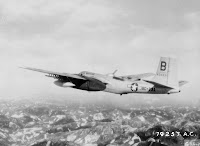 Meet Captain John Walmsley, Jr. John was a B-26 pilot in the Korean conflict. Part of his job was to develop tactics for using an 80 million candlepower searchlight installed on the aircraft for night attacks. On Sept. 12, 1951, he made his first successful night attack on a truck convoy. A couple nights later, he was back out searching for targets. He found a supply train and managed to disable it, but ran out of ammunition. So he called in a second B-26 to assist in finishing off the train. His technique? He turned on his light and gave the other pilot a clear view to make his attacks. Of course, that made Capt. Walmsley very visible. Despite the heavy flak from gunners all around the mountainous region, Walmsley refused to take evasive maneuvers so that the second B-26 could finish its attack. His plane was hit and he died that night in a fiery crash two miles away. Mission accomplished.
 Since the Air Force only allows officers to fly, and most Air Force combat is flying combat, most Medal of Honor recipients in the Air Force would be officers. Staff Sgt. William Pitsenbarger is an exception. Flying almost 300 rescue missions in Vietnam, SSgt Pitsenbarger risked his life on a daily basis as he and the crew of the HH-43F helicopter they flew spent their days rescuing soldiers and airmen in trouble. On April 11, 1966, his helicopter was sent with another to extract a group of Army casualties pinned down in battle near Saigon. SSgt Pitsenbarger's job was to be lowered down on a cable, provide initial first aid to the wounded, then attach them and have them lifted back up. Of course, that was a dangerous job. After having rescued nine injured men, a helicopter that was lowering its litter basket took fire. They had to leave quickly, but Pitsenbarger didn't take the safe route and get in the litter. He waved them off and waited with the wounded. The enemy fire was too intense for a return flight, so he waited for an hour and a half while he improvised splints and stretchers for the injured. When the fighting troops ran low on ammo, he ran into enemy fire to retrieve ammo clips from dead soldiers to resupply them. Finally, he picked up a rifle and joined in the fray himself. SSgt Pitsenbarger was found the next day. He had been killed in the night by a sniper. In one hand he still held the rifle and in the other he still held the medical kit. He didn't survive, but nine men who wouldn't have without his efforts did.
These are just a very few of the stories of those who earned our nation's highest honor for our military personnel. Beyond these, there are vast numbers who died with less recognition. We owe our freedom to people like these who considered their sacrifice not too extreme in the service of their country. They deserve our gratitude and our respect.


These are just a very few of the stories of those who earned our nation's highest honor for our military personnel. Beyond these, there are vast numbers who died with less recognition. We owe our freedom to people like these who considered their sacrifice not too extreme in the service of their country. They deserve our gratitude and our respect.
Monday, May 30, 2011
Murphy's Law
We know Murphy's Law. If anything can go wrong, it will go wrong. Murphy, as it turns out, was an Air Force captain. He was working on a project testing the amount of acceleration a human body could take. But a technician with a 50/50 chance of getting the accelerometers glued on correctly got them all wrong and the test was a bust.
It's Memorial Day, a day we honor those fallen in fighting for our country. So I thought you'd like to meet another Murphy or two.
Take, for instance, Lieutenant Michael Murphy. Lt. Murphy was a Navy SEAL in Afghanistan in 2005. He was leading a four-man team searching for a key Taliban leader in the mountains of Afghanistan. The team encountered three Afghan goat herders. Now they had a dilemma. Do they let them go and risk discovery or do they shoot them and be safe? The team let them go. As a result, they found themselves facing 30 to 40 Taliban fighters. The four put up a fight although each was injured. Murphy decided that they needed to call for help, but their location provided no signal, so he had to move away from the protection and out into the open. Without hesitating, and bleeding from a stomach wound, he went out to make the call. He was shot in the back and dropped the handset, but retrieved it and contacted his superiors to get help. Petty Officer Marcus Luttrell, a witness to his bravery, said, "I looked back up at Mikey and he took two rounds to the back and sat back up, hung up the phone." Murphy continued to fire until three of the four were killed. Luttrell alone survived the attack after being blown off the edge of the ridge by a grenade and captured, but the Army reconnaissance team sent to recover the SEAL team rescued him, and Lt. Michael Murphy was awarded the Medal of Honor for "extraordinary heroism in the face of grave danger." "By his selfless leadership, courageous actions, and extraordinary devotion to duty, Lieutenant Murphy reflected great credit upon himself and upheld the highest traditions of the United States Naval Service." At the presentation of the medal President Bush said, "With this medal, we acknowledge a debt that will not diminish with time and can never be repaid."
Another Murphy you might like to hear about is Frederick C. Murphy. PFC Murphy was a medic at the Siegfried Line in 1945. During the fighting, Murphy was shot in the shoulder. Refusing treatment, he continued to treat injured soldiers amid machine gun, mortar, and artillery fire. The company ran into a minefield, but Murphy moved in to help those injured in the field. Eventually, of course, it got the best of him and he stepped on a mine that blew off one of his feet. Refusing to be evacuated, he crawled from man to man giving aid until he crawled across another mine and was killed. At the cost of his own life, PFC Frederick Murphy saved the lives of many soldiers.
Or how about a famous Murphy? Audie Murphy tried to join the military in 1941 at the age of 17. Turned down because he was too young and too small, he finally got into the Army. He had to fight the system to get into combat, but he eventually took part in the invasion of Italy where he distinguished himself repeatedly. Despite bouts of malaria, he fought hard and earned promotions and decorations. Then his division was moved to southern France. Murphy earned the Distinguished Service Cross one day when his good friend was fooled by a German soldier pretending to surrender and was killed. Murphy was so mad he killed everyone in the machine-gun nest that had killed his friend, then took their machine gun and destroyed several other enemy locations. But Murphy wasn't done there. The next day his unit fought in 2 feet of snow against overwhelming odds. With more than 100 of his 128-man unit killed, he ordered the remaining 18 to safety while he covered their retreat. Alone and surrounded on three sides, he faced 6 German tanks and an entire German company. He called in artillery fire and, when he ran out of ammunition, got onto a burning tank destroyer to use its .50 caliber machine gun. He continued to call in artillery and fight off enemy troops while being wounded himself for almost an hour until the phone line was cut by enemy fire. Then the 18 returned and he organized them into a counter attack which drove the remaining Germans from the battle. His citation concluded, "2d Lt. Murphy's indomitable courage and his refusal to give an inch of ground saved his company from possible encirclement and destruction, and enabled it to hold the woods which had been the enemy's objective."
We have a rich heritage of people who have fought and fought bravely for freedom. And although Murphy's Law may be that what can go wrong will go wrong, sometimes "Murphy" might just mean that someone was extraordinarily brave in the face of great hardship for the sake of his country.
It's Memorial Day, a day we honor those fallen in fighting for our country. So I thought you'd like to meet another Murphy or two.
Take, for instance, Lieutenant Michael Murphy. Lt. Murphy was a Navy SEAL in Afghanistan in 2005. He was leading a four-man team searching for a key Taliban leader in the mountains of Afghanistan. The team encountered three Afghan goat herders. Now they had a dilemma. Do they let them go and risk discovery or do they shoot them and be safe? The team let them go. As a result, they found themselves facing 30 to 40 Taliban fighters. The four put up a fight although each was injured. Murphy decided that they needed to call for help, but their location provided no signal, so he had to move away from the protection and out into the open. Without hesitating, and bleeding from a stomach wound, he went out to make the call. He was shot in the back and dropped the handset, but retrieved it and contacted his superiors to get help. Petty Officer Marcus Luttrell, a witness to his bravery, said, "I looked back up at Mikey and he took two rounds to the back and sat back up, hung up the phone." Murphy continued to fire until three of the four were killed. Luttrell alone survived the attack after being blown off the edge of the ridge by a grenade and captured, but the Army reconnaissance team sent to recover the SEAL team rescued him, and Lt. Michael Murphy was awarded the Medal of Honor for "extraordinary heroism in the face of grave danger." "By his selfless leadership, courageous actions, and extraordinary devotion to duty, Lieutenant Murphy reflected great credit upon himself and upheld the highest traditions of the United States Naval Service." At the presentation of the medal President Bush said, "With this medal, we acknowledge a debt that will not diminish with time and can never be repaid."
Another Murphy you might like to hear about is Frederick C. Murphy. PFC Murphy was a medic at the Siegfried Line in 1945. During the fighting, Murphy was shot in the shoulder. Refusing treatment, he continued to treat injured soldiers amid machine gun, mortar, and artillery fire. The company ran into a minefield, but Murphy moved in to help those injured in the field. Eventually, of course, it got the best of him and he stepped on a mine that blew off one of his feet. Refusing to be evacuated, he crawled from man to man giving aid until he crawled across another mine and was killed. At the cost of his own life, PFC Frederick Murphy saved the lives of many soldiers.
Or how about a famous Murphy? Audie Murphy tried to join the military in 1941 at the age of 17. Turned down because he was too young and too small, he finally got into the Army. He had to fight the system to get into combat, but he eventually took part in the invasion of Italy where he distinguished himself repeatedly. Despite bouts of malaria, he fought hard and earned promotions and decorations. Then his division was moved to southern France. Murphy earned the Distinguished Service Cross one day when his good friend was fooled by a German soldier pretending to surrender and was killed. Murphy was so mad he killed everyone in the machine-gun nest that had killed his friend, then took their machine gun and destroyed several other enemy locations. But Murphy wasn't done there. The next day his unit fought in 2 feet of snow against overwhelming odds. With more than 100 of his 128-man unit killed, he ordered the remaining 18 to safety while he covered their retreat. Alone and surrounded on three sides, he faced 6 German tanks and an entire German company. He called in artillery fire and, when he ran out of ammunition, got onto a burning tank destroyer to use its .50 caliber machine gun. He continued to call in artillery and fight off enemy troops while being wounded himself for almost an hour until the phone line was cut by enemy fire. Then the 18 returned and he organized them into a counter attack which drove the remaining Germans from the battle. His citation concluded, "2d Lt. Murphy's indomitable courage and his refusal to give an inch of ground saved his company from possible encirclement and destruction, and enabled it to hold the woods which had been the enemy's objective."
We have a rich heritage of people who have fought and fought bravely for freedom. And although Murphy's Law may be that what can go wrong will go wrong, sometimes "Murphy" might just mean that someone was extraordinarily brave in the face of great hardship for the sake of his country.
Subscribe to:
Posts (Atom)